
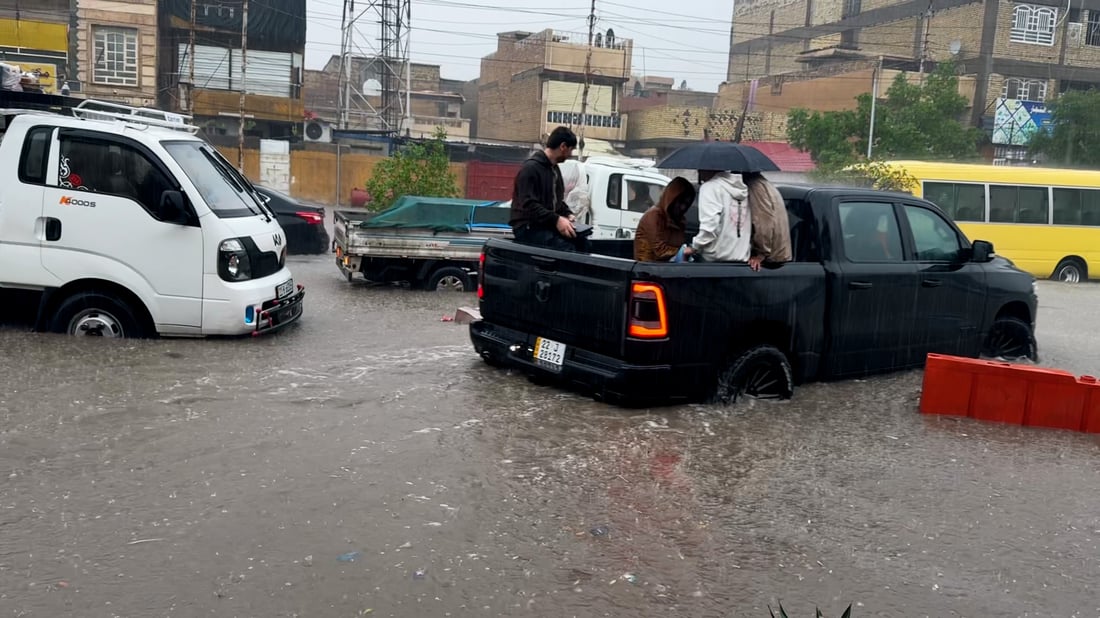
Residents in Baghdad navigate deep floodwater in pickup trucks and small vehicles during continued rainfall across the capital. Photo by 964media.
Rain boosts Iraq’s depleted water reserves by 250 million cubic meters
BAGHDAD — Iraq’s Water Resources Ministry said the weekend’s heavy rainfall added 250 million cubic meters of water to national storage, strengthening dam reserves and improving conditions for agriculture and grazing after five consecutive dry seasons.
Ministry spokesperson Khaled Shamal told the state newspaper Al-Sabah that “the amount of water collected from the first wave of rain that Iraq witnessed last Saturday reached 250 million cubic meters,” saying rainfall exceeded normal levels in most governorates except parts of the central and northern regions.
He said the ministry directed rain north of the Samarra and Haditha dams into dam storage, while rainfall south of the dams was allowed to replenish rangelands, stabilize soil, recharge groundwater and improve well output — reducing the need to pump from Lake Tharthar.
Shamal said the ministry continues to coordinate with the Agriculture Ministry on the winter cropping plan, relying on three indicators: current dam and reservoir storage, actual inflows including rainfall and groundwater, and global market conditions for strategic crops.
Agriculture Ministry adviser Mehdi Dhamad al-Qaisi said the rainfall “will greatly strengthen dryland farming systems,” especially wheat, which depends entirely on rainfall in non-irrigated areas. He said the storm will help revive natural grazing lands, noting that dormant seeds in desert regions will germinate more easily, providing green pasture for sheep, goats and camels. The improvement, he said, will support meat and livestock production and “strengthen food security for herders and enhance the country’s economy.”
Al-Qaisi said the rain will also help restore groundwater reserves severely depleted by years of drought, easing pressure on wells in winter-season farm areas. He added that reliance on sprinkler irrigation will decline because the rainfall “already watered the plants and strengthened their growth.”
Iraq’s Water Resources Ministry says national reserves have dropped to just 8% of total storage capacity — the lowest level in nearly a century — due to climate change, low rainfall and reduced inflows from upstream countries. Officials warn that water shortages continue to strain all governorates, with central and southern provinces the most affected.