
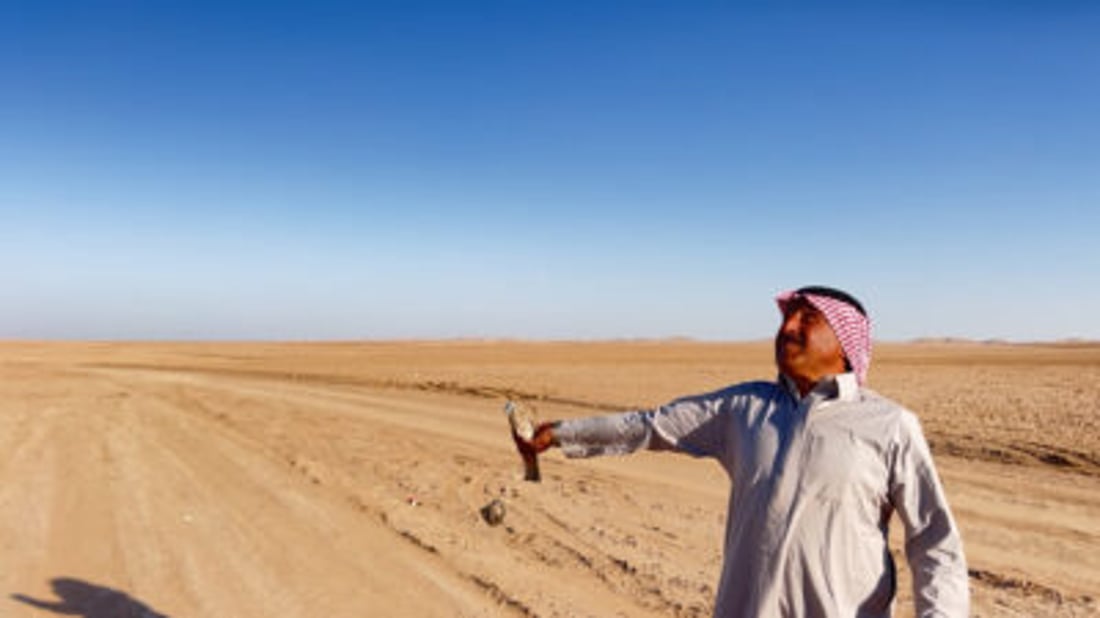
Falcon hunting season draws hunters from Iraq and the wider Gulf to Nineveh
NINEVEH – Hunters from across Iraq and the Gulf region have begun the seasonal pursuit of falcons and other migratory birds stretching from Rabi’a to Tel Afar.
From early September through January, Iraqi hunters set traps in what they describe as calculated positions. Among them is Ghazi Al-Mutlak Al-Shammari, who emphasized his distinction from traditional hunters.
Al-Shammari told 964media. “There’s a difference between someone who carries a rifle, lives in the wild and chases rabbits and birds, and a ‘falconer’ who uses falcons to hunt prey like birds. I catch falcons and sell them to falconers.”
To lure falcons, Al-Shammari and others use small hawk-like birds known locally as bāshiq, attaching feather balls to their legs. These act as visual bait. When a falcon attacks what it believes is prey, its talons get trapped, bringing both birds to the ground.
Additional methods include using decoy birds such as pigeons rigged with nets. Once a falcon attempts to capture the bait and becomes fatigued, the hunter closes in to catch it.
Video footage shared with 964media showed falcon captures and chase scenes from previous seasons.
Iraqi hunter Ali Fadel Mutshar told 964media that hunting season begins in September, coinciding with the migration of birds from the north. “Prices vary depending on the type and size of the bird,” he said.
Gulf hunters favor Iraq’s vast desert spaces, where they can pursue prey freely and find a range of birds. According to Mutshar, common methods include using nets or bait birds to attract falcons.
Shammari described the process of capturing birds such as requiring skill, including fitting bait birds with net traps. If a falcon avoids the trap, hunters switch to using a live pigeon as bait and must watch closely for signs of an impending catch.
“Capturing a falcon requires careful observation,” he said.