
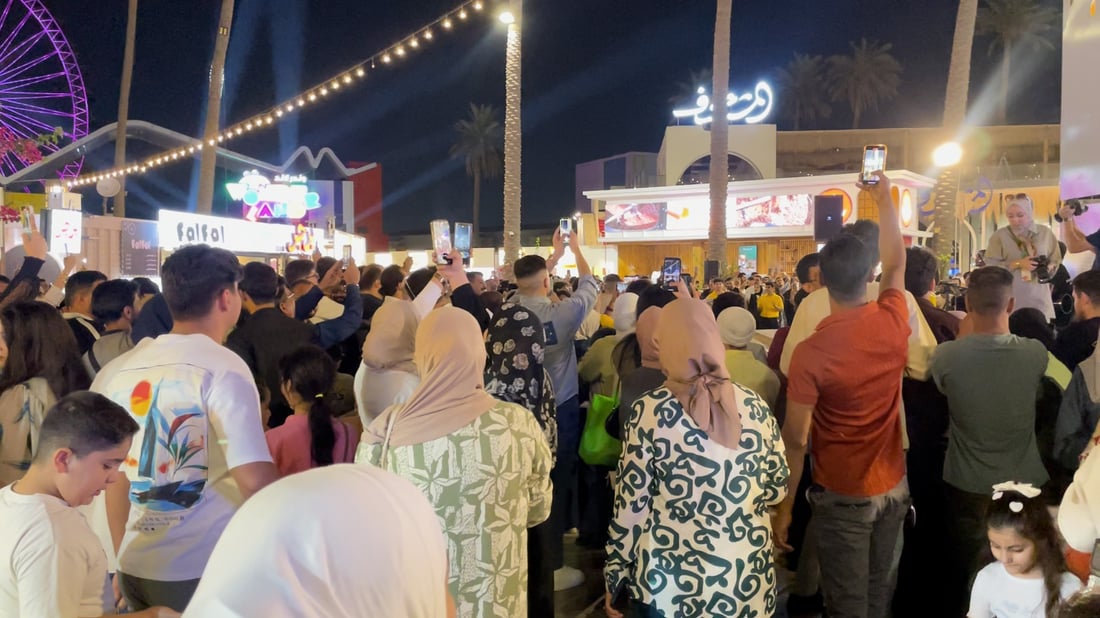
Crowds gather at the Baghdad Palm Complex during the Coffee and Tea Festival, celebrating Iraq’s love for tea and coffee. (Photo by 964media)
Baghdad’s first Coffee and Tea Festival draws crowds celebrating Iraq’s penchant for caffeine
BAGHDAD — Iraqis are known for their deep affection for tea, often considered unmatched in the region, yet the country has never hosted a dedicated tea festival. The Baghdad Palm Complex in Dora is trying to change that with its annual Coffee and Tea Festival, which continues to attract large crowds of local families.
Ahmed Muhyi, sales manager at Al-Tuffaha Tea Company, told 964media that his company has been well known in Iraq since the 1990s, offering products such as black tea, flavored tea, black tea with a red thread, and cardamom tea. “Black tea with a red thread is preferred by restaurants in Karrada and Mansour, while flavored tea is often used in Shorja shops for southern-style blends,” Muhyi said. “Cardamom tea is favored by families seeking a stronger taste of cardamom, and some people mix black, flavored, and cardamom teas together.” He added that all their teas come from Sri Lanka under the Al-Tuffaha and Al-Barari brands.
Hussein Rashid, quality manager at Al-Sanobar Company, which produces Rida Alwan Coffee, said his company joined the festival’s second edition with several coffee varieties. “We roast green coffee beans and turn them into consumable coffee,” Rashid said. “Our products include an Espresso Blend for those who enjoy strong, heavy-extraction coffee, and Guatemala coffee roasted to medium level to extract clear flavors and rich notes, prepared using the V60 technique for lighter bitterness and more distinct taste.” He said the company also offers Colombia coffee roasted to medium level for diverse flavor notes, along with varieties from Brazil and India used for Turkish coffee “known for stronger bitterness and higher consistency.”
The festival continues to grow as a showcase for Iraq’s tea heritage and expanding coffee culture, reflecting how both drinks remain central to the country’s daily life and hospitality.