
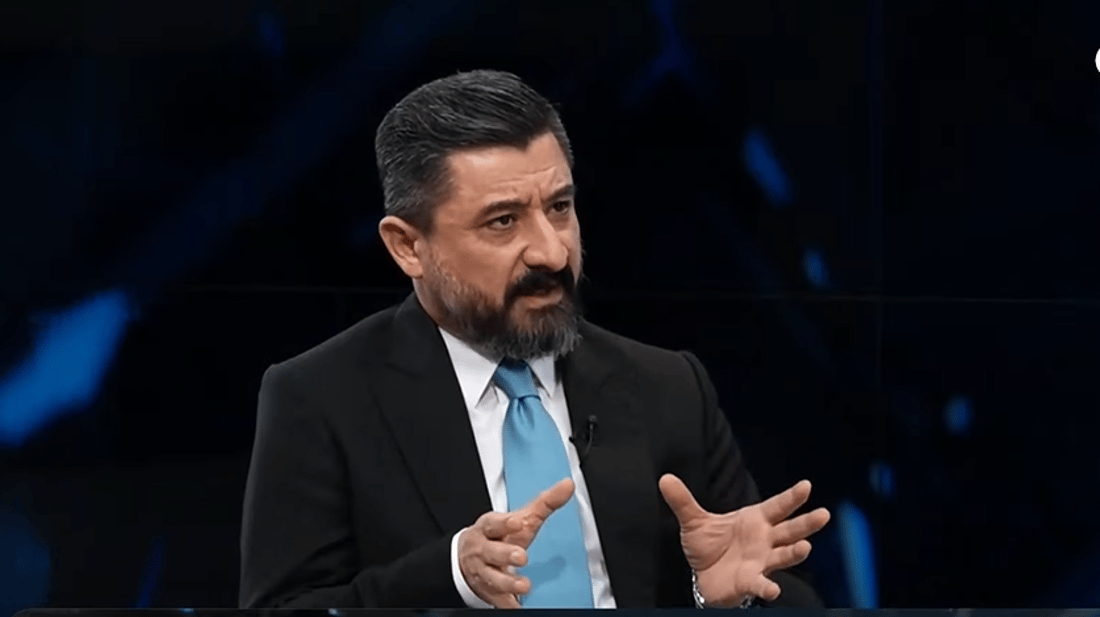
Khalid Shwani, Iraq’s Justice Minister
Media Monitor
Iraq’s justice minister talks legal diversity, property fraud crackdown, and prison overcrowding
BAGHDAD — Justice Minister Khalid Shwani addressed human rights concerns, prison overcrowding, and property fraud in an interview with Dijlah TV, saying Iraq is working to balance reforms with social realities.
Shwani acknowledged that the international community has raised concerns about freedoms in Iraq, particularly after amendments to the Personal Status Law passed by parliament on Jan. 21. The amendments allow family issues such as inheritance, divorce, and child custody to be settled either by religious authorities or civil courts. Critics have warned the changes could weaken protections for women. Shwani said the state views the law as part of “the right to express opinions and beliefs for a broad segment of the Iraqi social fabric.”
On combating forgery, Shwani said automation is the long-term solution but insisted “90% of systematic forgery in real estate registration offices has been eliminated.” He said any cases that occur in sub-offices are detected.
Turning to prison reform, the minister said 9,200 inmates have been released under the General Amnesty Law, easing overcrowding from 300% to 132%. He said Iraq’s prison population has grown from 60,000 to 70,000 since he took office but noted that new and expanded facilities have reduced pressure.
Responding to criticism of freedom of expression, Shwani denied Iraq holds political prisoners. “We do not have prisoners of conscience in Iraq, and there are no prisoners held for political opinions,” he claimed.
Excerpts from Khalid Shwani’s interview with Dijlah TV:
The international community has observations regarding the state of freedoms and human rights in Iraq, and the issue of the Shiite Personal Status Code is at the top of these observations, which are presented in the form of recommendations in accordance with the Universal Declaration of Human Rights. Iraq then has the option to either sign and accept them or reject them. We clarified our response that the Jaafari Code falls within the framework of religious and sectarian diversity in the country. It is part of the right to express opinions and beliefs for a broad segment of the Iraqi social fabric. This is the state’s position.
However, my personal opinion is different because I am a civilian man who believes in equality between men and women, and I believe in the right of anyone to organize their social relations according to the direction they see fit, just as I have the right to organize my relationships according to the direction I see fit.
We have eliminated 90% of systematic forgery operations in real estate registration offices, which used to target three groups: immigrants, specifically Christians, and properties of former regime affiliates registered under unknown names for the purpose of money laundering, as well as some high-value properties in upscale areas. We have taken many measures in this regard, such as photographing all records and depositing multiple copies at the Ministry of Justice, the General Secretariat of the Council of Ministers, and the Central Bank.
Even if forgery occurs in a sub-office, it will be detected by us. In addition, we installed cameras in all offices, banned the entry of brokers, and imposed disciplinary and integrity measures on violating employees. However, the fundamental solution to the forgery problem is automation.
A total of 9,200 prisoners have been released under the General Amnesty Law. This helps us reduce overcrowding in Iraqi prisons. When I took over the ministry, we had around 60,000 inmates. The number then increased to around 70,000. At the beginning of my tenure, I stated that overcrowding had reached 300%. But now the rate has dropped to 132% after opening several reform centers and expanding others.
We do not have prisoners of conscience in Iraq, and there are no prisoners held for political opinions. However, some individuals have been sentenced under defamation laws. I do not know if anyone has been sentenced under laws related to insulting state symbols. Those convicted of “low-content” cases are immediately transferred to our correctional facilities once their legal status changes from being detained in police centers to being sentenced by court ruling.
Extremism rates have significantly declined in Iraqi prisons after the adoption of educational and training curricula, as well as the introduction of music and art. We managed to dismantle two major drug networks in Taji and Abu Ghraib prisons. The phenomenon of communication and mobile devices has also decreased after imposing strict measures, and we are trying to block mobile networks inside prisons.