
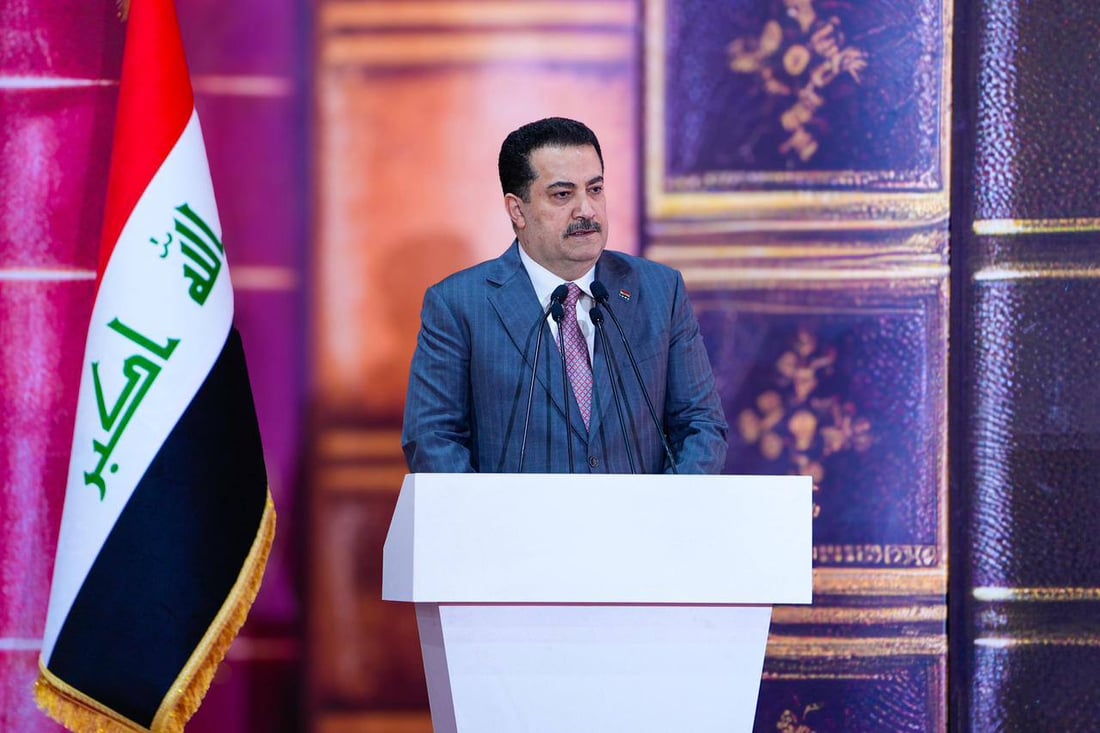
(Photo: Al-Sudani's media office)
Monitor
Al-Sudani declares Babil Iraq’s industrial capital, opens new factories
BABIL — Prime Minister Mohammed Shia Al-Sudani on Monday declared Babil the Industrial Capital of Iraq while inaugurating a series of new factories in the governorate.
“Only a few years ago, talk of an Iraqi industrial revival was considered unrealistic. Today, however, Iraq is experiencing a genuine production breakthrough in both scale and quality,” Al-Sudani said during a ceremony at the Al-Mutahida Company for Plastic Industries.
The projects launched include the Ampoules and Plastic Caps Factory with an annual capacity of 120,000 tons, the Flexographic Printing Factory with a capacity of 35,000 tons, and the Plastic Pellets Factory Project, which is set to produce 300,000 tons per year. All three are private sector investments.
Al-Sudani said Babil has become home to “emerging private-sector industrial clusters, serving as indicators of a vibrant economic movement,” adding that 54 Iraqi factories have already begun exporting products to regional and international markets.
Statement from Al-Sudani’s media office:
Prime Minister Mohammed S. Al-Sudani officially declared today, Monday, Babylon as the Industrial Capital of Iraq. He also inaugurated the Ampoules and Plastic Caps Factory with an annual capacity of 120,000 tons, the Flexographic Printing Factory with an annual capacity of 35,000 tons, and launched the Plastic Pellets Factory Project with a capacity of 300,000 tons per year—all private sector projects in Babil Province.
The Prime Minister underscored the significance of proclaiming Babylon as Iraq’s Industrial Capital during a ceremony held at the Al-Mutahida Company for Plastic Industries in the province, attended by the Chairman of the National Investment Commission, the Governor of Babil, the President of the Iraqi Industries Union, as well as a number of advisors and senior officials.
Prime Minister Al-Sudani explained that Babil was chosen for its advantages, resources, and central location within national transport networks, in addition to being an agricultural province that offers opportunities for integrated growth between agriculture and industry. He commended the efforts of the local government, the Governor, the Provincial Council, and members of parliament for helping to lay the foundation for this achievement.
Prime Minister Al-Sudani highlighted Babil’s rich natural and human resources, and its capable, forward-looking private sector that can establish key factories producing goods for export to neighboring markets. He noted that the newly inaugurated factories are equipped with the latest production lines and that all workers are covered by social security, a reflection of sound planning.
Prime Minister Al-Sudani stressed that, only a few years ago, talk of an Iraqi industrial revival was considered unrealistic. Today, however, Iraq is experiencing a genuine production breakthrough in both scale and quality.
Key points from Prime Minister Al-Sudani’s remarks:
🔷 Babil is now home to emerging private-sector industrial clusters, serving as indicators of a vibrant economic movement.
🔷 Iraq has achieved self-sufficiency in several key products, including sugar, cooking oil, phosphate fertilizers, rebar, urea, a wide range of pharmaceuticals, cement, and other chemical goods.
🔷 Fifty-four Iraqi factories have already begun exporting to regional and international markets.
🔷 Industry means creating jobs for young people, and we are supporting small and medium-sized enterprises through the Riyada program and loans from the Ministry of Labor.
🔷 Investment licenses for more than one million housing units have created strong demand for construction material factories.
🔷 We have launched Iraq’s Vision 2050, aimed at building a diversified economy and moving away from dependence on oil alone.
🔷 This vision has been implemented since the very beginning of this government’s tenure, and today we are witnessing one of its results.
🔷 Encouraging indicators include the increase of non-oil revenues to 14%, up from 7% a few years ago, with a target of reaching 20%.
🔷 We have directed governors to give greater attention to industry, while recognizing the importance of services, by leveraging each province’s unique strengths.
🔷 The sound of machinery and factories must remain the loudest in Iraq.