
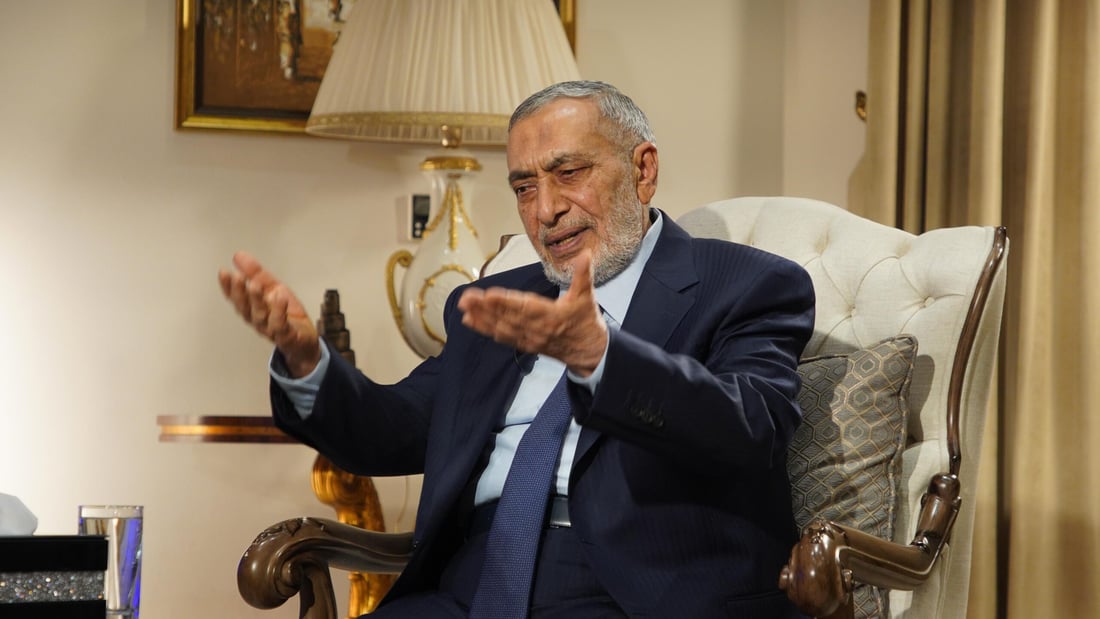
Iraqi Parliament Speaker Mahmoud Al-Mashhadani
Media Monitor
‘No need to legislate the law today,’ says Iraq parliament speaker on PMF bill
BAGHDAD — Parliament Speaker Mahmoud Al-Mashhadani said the Popular Mobilization Forces retirement law was delayed after the Security and Defense Committee advised against passing it, warning that the measure would “retire more than 3,000 experienced fighters” at a time when Iraq was facing “difficult regional circumstances.”
Al-Mashhadani said the government later introduced a draft law on the PMF’s structure after withdrawing the retirement law, to ensure each fighter received a “proper job description” before any future vote on retirement.
The speaker said political leaders were “surprised by an American message” sent to all parties. Earlier this year, U.S. Secretary of State Marco Rubio warned Prime Minister Mohammed Shia Al-Sudani that the PMF legislation would “institutionalize Iranian influence and armed terrorist groups undermining Iraq’s sovereignty.”
Al-Mashhadani stressed that Iraqis “do not submit to threats” but acknowledged the risks of confrontation, warning that sanctions on state oil marketer SOMO or the Trade Bank of Iraq would undermine the government’s ability to pay salaries.
He rejected claims that the government opposed the PMF, saying the decision was meant to protect it. “The issue cannot bear stubbornness. The matter is temporary, and it is a ‘cold’ law that can be legislated at a later time when the region’s conditions calm down,” he said, adding that the PMF was functioning normally and receiving salaries.
Al-Mashhadani said there was “no need to legislate the law today,” warning that even a “1% risk” made it unwise to move forward now. He described the draft as important because it places the PMF under the command of the commander-in-chief of the armed forces, but expressed concern over external pressures. “What worries me is Netanyahu’s and Israel’s intention of a ground invasion, because our armed forces do not have air cover, but they do have good ground forces,” he said. “There are those who want to remove the PMF in order to weaken our ground forces.”
Parliament completed the second reading of the draft law in mid-July, though many Sunni and Kurdish lawmakers walked out in protest at its inclusion on the session’s agenda without consensus. No date has been set for a final vote.
The PMF, also known as Hashd al-Shaabi, was formed in 2014 to fight the Islamic State. While it is officially part of Iraq’s security apparatus, it includes factions with close ties to Iran and operate with varying degrees of autonomy from the government.
Excerpts from Al-Mashhadani’s interview with Alawla TV :
All draft laws and legislations are referred to the relevant parliamentary committee, and the Popular Mobilization Forces law as well, as it was referred to the Security and Defense Committee which listened to their recommendations. They told me that passing the law now would cause many problems because it would retire more than 3,000 experienced fighters, while the country is going through difficult regional circumstances. This was during the war on Lebanon, and I saw that their recommendation was correct, so we returned the law to the Council of Ministers.
The Council of Ministers sent us the law on the structure of the PMF, after withdrawing the PMF retirement law, so that we could vote on the structure and each member would receive a proper job description if we later voted on the retirement law.
This coincided with the repercussions in Syria, which greatly affected the situation in Iraq, to the point that the Parliament postponed and overlooked questioning some security leaders so as not to send a negative message to society.
But afterwards, we were surprised by an American message sent to all political leaders, stating that Iraq is a sovereign state, and they would not interfere in the process of legislating laws, but some of the laws you legislate would contradict United States laws, and this would prevent the U.S. administration from cooperating with you in security and economy due to American laws, otherwise there would be security, political, and economic sanctions.
Iraqis do not submit to threats, and if they had, what happened to them since 1958 until now would not have happened. They are “upset” that they do not share borders with Palestine and Lebanon. But the meetings of the presidencies produced a vision that even if the American message was 95% just a threat, the existence of a 5% American threat would be very dangerous to Iraqi interests. We still need security cooperation with the United States, and if SOMO or TBI Bank were sanctioned, then from where would we provide salaries for employees? The interest requires not legislating the PMF law.
There are those who believe we are against the PMF, but we want to protect it, and the issue cannot bear stubbornness. The matter is temporary, and it is a “cold” law that can be legislated at a later time when the region’s conditions calm down.
The PMF is doing well, salaries are ongoing, and there are no problems. So, the law is not necessary at this time, and I say our current situation only requires waiting, not forgetting the law, just waiting.
There is no need to legislate the law today, for even if there is a 1% risk, it would be wise not to take the gamble, even though the law is important for the state because it defines the structure of the PMF and places it under the command of the Commander-in-Chief of the Armed Forces.
This is understood by the ambassadors of major countries, but those behind them have other goals. What worries me is Netanyahu’s and Israel’s intention of a ground invasion, because our armed forces do not have air cover, but they do have good ground forces. Even without air cover, we can cause damage. There are those who want to remove the PMF in order to weaken our ground forces.