
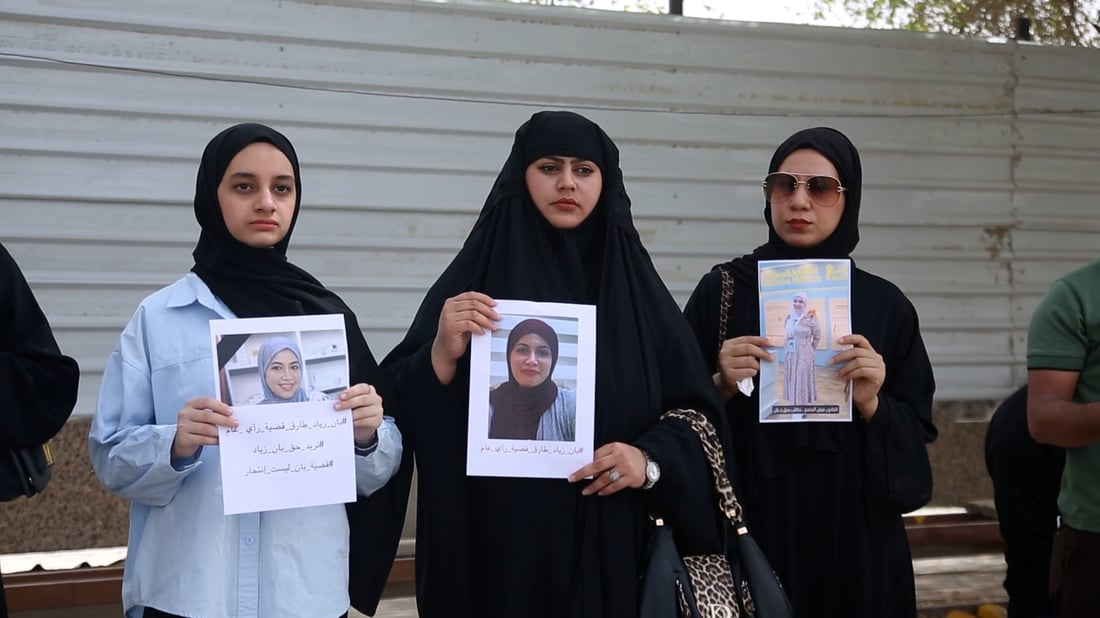
Women hold photos of Dr. Ban Ziyad Tariq during a protest in Samawah, Muthanna governorate, calling for justice in her case and stronger laws to protect women. Photo by 964media.
Following nationwide protests
Basra court rules psychiatrist Ban Ziyad Tariq’s death was suicide, closes case
BASRA — Iraq’s judiciary has issued its final decision in the case of psychiatrist Ban Ziyad Tariq, ruling that her death was a suicide. It follows weeks of public protests nationwide and speculation that cast doubt over the preliminary findings following her death in early August.
The Basra Investigative Court, in a decision dated Aug. 18, 2025, cited forensic and technical reports that reviewed the crime scene, injuries, toxicology results, and electronic evidence. The court said Tariq had been suffering from chronic depression and receiving psychiatric medication, noting that she had sought treatment in both Baghdad and Basra.
Investigators examined her medical history, witness testimony, and recorded conversations, including messages in which she wrote: “I am tired, I want to rest, I want to go.” The ruling said treated these messages as intent to end her life.
A forensic report concluded that Tariq’s injuries were self-inflicted, citing deep cuts on both wrists, rapid blood loss, and asphyxiation linked to a drug interaction. The court said there were no signs of struggle, forced entry, or poisoning, and determined the findings were consistent with suicide.
The judiciary dismissed allegations raised by protesters and lawmakers that Tariq had been murdered. “The case does not represent a criminal act of intentional killing but rather suicide,” the decision stated, rejecting claims of political interference or cover-ups.
The ruling also ordered the release of Omar Dhahi Mustafa, who had been detained during the investigation after personal communications with Tariq raised suspicion. The court said the evidence did not establish a connection between him and her death.
Tariq, a psychiatrist in her thirties, was found dead at her home in Basra on Aug. 4. Police initially classified the case as suicide, but colleagues and activists challenged that conclusion, citing signs of strangulation, bruising, and disabled surveillance cameras. Demonstrations took place in Baghdad, Kirkuk, Erbil, and Diyala demanding transparency and a murder investigation.
The court addressed those points directly, saying camera malfunctions were technical, wounds were consistent with self-inflicted cuts, and no evidence supported strangulation or external assault. It concluded: “The investigation confirms the incident is suicide, not a homicide.”