
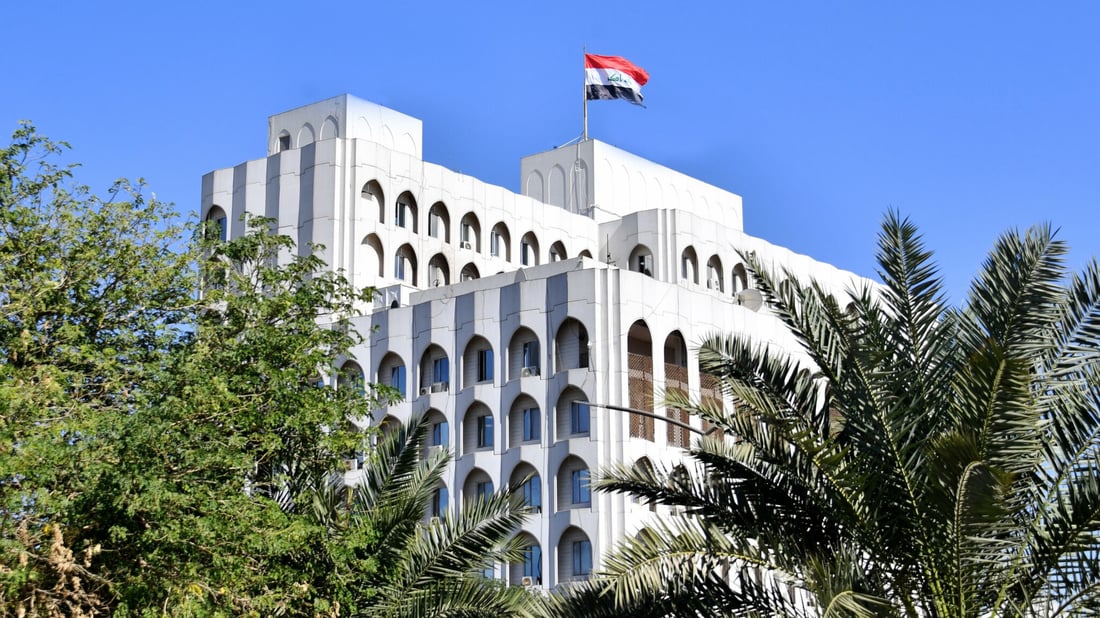
The Iraqi Foreign Ministry building in Baghdad
'Strong objection'
Iraq protests British ambassador’s remarks on PMF draft law
BAGHDAD — Iraq’s Foreign Ministry on Sunday lodged a formal protest with British Ambassador to Iraq Irfan Siddiq over his recent comments on the draft Popular Mobilization Forces law, calling them a breach of diplomatic norms and interference in the country’s internal affairs.
In a statement, the ministry said it had “officially informed the United Kingdom’s ambassador of its strong objection to the recent media statements, which the Government of Iraq considers contrary to diplomatic norms and an interference in the internal affairs of the state.”
During a meeting on Aug. 10, Deputy Foreign Minister for Bilateral Affairs Mohammed Hussein Bahr Aluloom expressed the government’s “deep concern,” reaffirming that “this conduct is inconsistent with the provisions of the Vienna Convention on Diplomatic Relations, which require diplomatic representatives to respect the laws and regulations of the host state and refrain from interfering in its internal affairs.” The ministry urged the ambassador to avoid similar statements or activities in the future and to act in ways that support friendly relations between the two countries.
The protest followed Siddiq’s Aug. 8 interview on Al Sharqiya TV, where he questioned the role of the PMF in the post–Islamic State period, asking, “What is required of the PMF now to defend the country? And what are the challenges facing Iraq? And what is the nature of the risks?” He said the PMF’s role “cannot be the same as it was during the war against ISIS,” linking the government’s decision to request the withdrawal of the international coalition to the completion of its main task of combating ISIS.
Siddiq also stated that there should be a review of the PMF’s status “as an emergency force” now that the war against ISIS is considered over. He expressed concern about “some factions” not taking orders solely from Iraq’s top security leadership, citing an incident in Baghdad’s Dora area as an example of “individual acts by certain parties that violated the law and government decisions and challenged police and state agencies.”
The Foreign Ministry stressed the importance of constructive diplomatic engagement based on mutual respect and non-interference in the internal affairs of states.
The bill, referred to in some quarters as the amended PMF Authority Law, would elevate the Popular Mobilization Forces into a permanent military institution with sweeping operational, political, and financial powers. Critics say it resembles Iran’s Islamic Revolutionary Guard Corps in both structure and influence. The current draft would expand the PMF’s legal authority beyond its original 2016 framework, which governed wartime mobilization, and formally embed it in Iraq’s national security doctrine as a guarantor of the political order.