
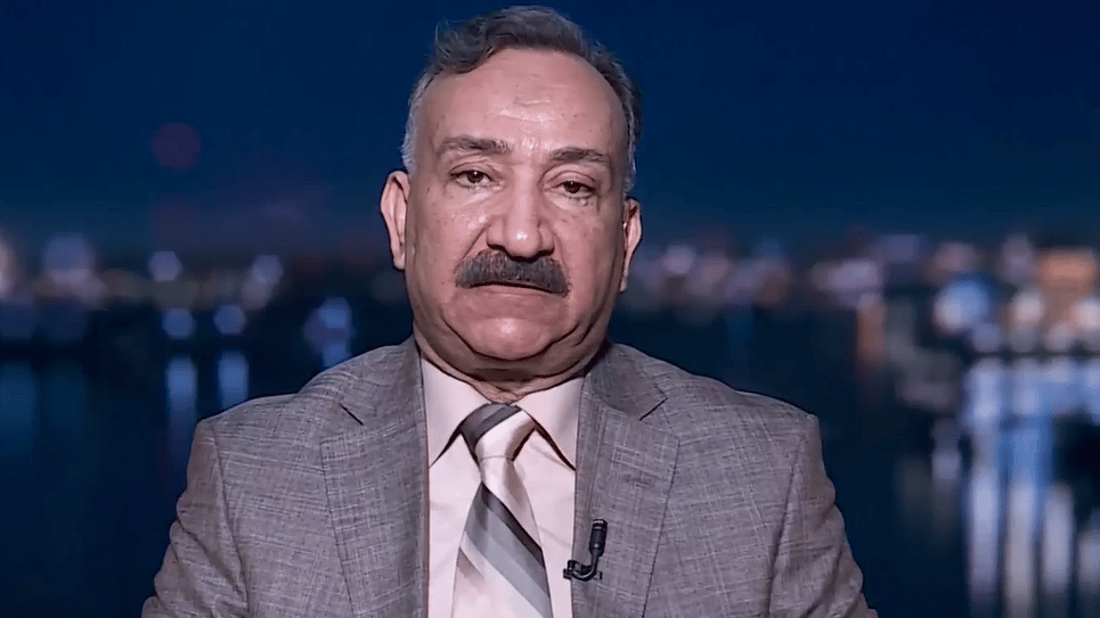
Security and strategic expert Ahmed al-Sharifi speaks during a UTV News broadcast
Media Monitor
Analyst warns Iraq’s airspace collapse risks sovereignty, foreign intervention
BAGHDAD — Security analyst Ahmed al-Sharifi warned Monday that the ongoing drone strikes across Iraq, including back-to-back incidents in Erbil, signal a dangerous collapse of state authority and could open the door to foreign intervention if unaddressed.
“What happened in Erbil is part of a series of operations taking place in the country, and they are systematic. We cannot justify the government’s silence on them,” al-Sharifi said during a UTV news broadcast. He rejected claims that the attacks originated outside Iraq, insisting, “It’s clear their origins are internal.”
Al-Sharifi described the erosion of airspace control as a critical failure with serious implications for Iraq’s sovereignty. “The most critical dimension of sovereignty is air sovereignty, followed by land, then maritime,” he said. “In my estimation, this collapse indicates a dangerous equation — we are losing control over the country’s sovereignty.”
His comments came after explosive-laden drones exploded near Erbil International Airport and the Khurmala oil field on Monday. While no injuries were reported, the Kurdistan Regional Government blamed armed groups affiliated with the Popular Mobilization Forces and accused federal authorities of failing to respond to repeated threats.
Baghdad rejected the accusations, with a government spokesperson urging Erbil to submit any evidence through official channels.
Some excerpts from al-Sharifi’s interview on UTV:
What happened in Erbil is part of a series of operations taking place in the country, and they are systematic. We cannot justify the government’s silence on them.
The issue of attributing these operations to a “third party” or claiming they are “cross-border” is no longer acceptable to the Iraqi public. It’s clear their origins are internal.
What justifies this state of collapse in air sovereignty? We put this matter before the Commander-in-Chief of the Armed Forces and say: the most critical dimension of sovereignty is air sovereignty, followed by land, then maritime.
This collapse, in my estimation, indicates a dangerous equation — we are losing control over the country’s sovereignty.
Does the drone operator know that the reaction is more dangerous than the drone itself? The C-ram system fires indiscriminately — 4,500 rounds per minute, each 23mm, and it operates for 4–5 minutes. All of this endangers the safety of citizens. These rounds fall from the sky, accelerate due to gravity, and become large shrapnel that can kill civilians. This has serious implications and must not be ignored.
The government’s failure to identify the perpetrators means abandoning sovereignty. This is a core responsibility, and anyone in the Ministry of Defense is under oath and legally obligated to explain these military violations in our country.
We cannot remain silent about the blackout. In my view, those who allowed air sovereignty to remain loose and uncontrolled are the same hands that struck the radars — the aerial eyes that monitor all suspicious activities. What is the purpose of blinding Iraq electronically?
There’s also the issue of depletion of capabilities. A radar costs $195 million, but the entire radar program exceeds $3 billion, and there is no economic capacity to replace it.
If you say Israel is planning and aiming for ungoverned airspace, then who is providing the means for this chaos? And who just yesterday targeted the F-16s?
The outcome of this trajectory will lead us to internationalization. That is the real danger — internationalization. Once the Iraqi state proves incapable of silencing the groups behind these operations, they could be labeled as threats to international peace and security, especially since they are targeting airports — which are aerial ports and essential to global peace. This could lead the Security Council to authorize certain countries to carry out eliminations of those behind the attacks.
If that happens, Iraqi youth will be lost, infrastructure will be destroyed, and we cannot rule out strikes on residential areas or the killing of innocent civilians.
It is time for the Prime Minister to sit down calmly with these well-known, identified groups — groups even the simplest citizens who can’t read or write know — and resolve this matter before it escalates to international intervention.