
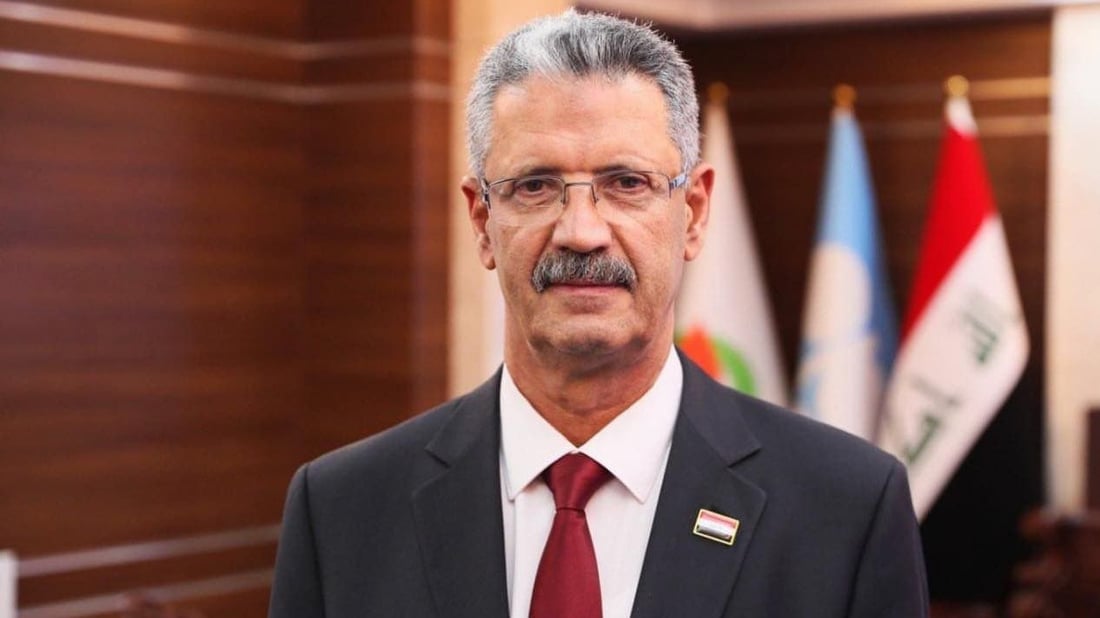
Iraq Oil Minister Hayan Abdul Ghani
Oil minister speaks
Baghdad says it is ready to resume Kurdish oil exports, but consumption dispute stalls deal
BAGHDAD — Iraq’s oil minister said Saturday the federal government is ready to resume crude exports from the Kurdistan Region through Turkey but remains at an impasse with regional officials over internal consumption levels.
Oil Minister Hayan Abdul Ghani told the state news agency that Turkey is also prepared to restart flows through the Iraq-Turkey pipeline to the port of Ceyhan. However, he said the Kurdistan Regional Government has demanded a higher allocation for domestic use than what is permitted under Iraq’s federal budget.
“The estimated internal consumption of 46,000 barrels per day is the point of disagreement before resuming exports,” Abdul Ghani said. “The region now demands this quantity be 65,000 barrels per day, which is a violation of the budget law.”
Under the budget approved earlier this year, the Kurdistan Region is required to deliver 400,000 barrels per day to Iraq’s State Oil Marketing Organization for export. Abdul Ghani said both federal and regional audit offices agreed on the 46,000-barrel figure for local consumption.
“This agreement has been delayed due to this one point,” he said. “We hope in the final stages that the region will accept this figure in order to implement the agreement.”
The federal government has offered to advance $16 per barrel to the region and proposed appointing a consulting firm to assess production costs, he said. “This agreement and amendment were presented to the Kurdistan Regional Government, and there was real approval from all parties,” Abdul Ghani added. “It was presented to Parliament, and all members agreed to it. We asked the region to implement it.”
He confirmed Baghdad has informed both Erbil and Ankara of its readiness to proceed. “Turkey is ready to resume oil exports through the Iraq-Turkey pipeline toward Ceyhan,” he said. “But we are waiting for our brothers in the region to deliver the agreed quantity of oil.”
Abdul Ghani said the ongoing suspension has deprived the federal government of around 300,000 barrels per day — oil that remains part of Iraq’s OPEC quota but is not controlled by Baghdad.
The Kurdistan Regional Government said on July 2 it had fulfilled all obligations to resume exports, including transferring revenues to the federal Ministry of Finance. Following a cabinet meeting chaired by Prime Minister Masrour Barzani, the KRG accused Baghdad of using the dispute to delay salary payments and said international oil companies are ready to cooperate.
Negotiations were held April 20 and included representatives from the Association of the Petroleum Industry of Kurdistan, or APIKUR. The meeting ended without a deal.
APIKUR has said its members are ready to resume exports once binding payment guarantees are in place. The group welcomed the $16-per-barrel provision in the amended budget passed Feb. 2, but said key issues — including unpaid arrears — remain unresolved.
“No progress has been made on the issue of IOC payment arrears,” the group said in a recent statement. It added that talks have been “limited and unproductive.”
APIKUR spokesman Myles B. Caggins III said companies had submitted proposals that comply with Iraqi law and their contracts but have yet to receive assurances. “We regret the lack of progress,” he said. “Nevertheless we will continue to push for a resumption of oil exports through the Iraq-Türkiye Pipeline.”
Pipeline exports have been suspended since March 2023, after an international arbitration ruling held Turkey liable for transporting Kurdish oil without Baghdad’s consent. Before the shutdown, about 450,000 barrels per day flowed through the line.