
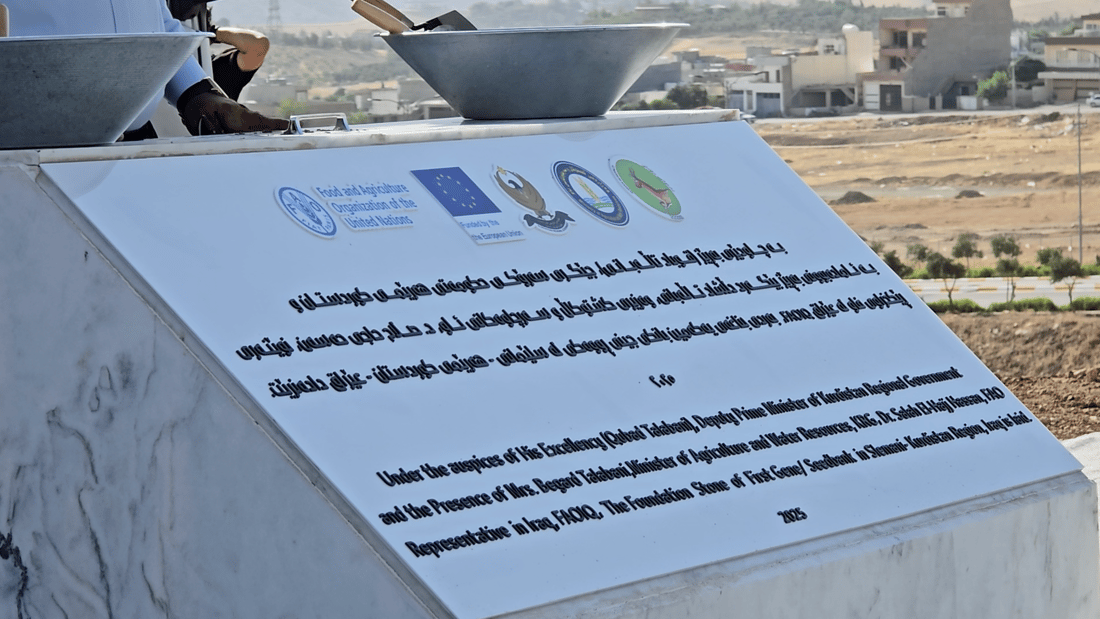
A commemorative plaque marks the foundation stone of the new gene bank project in Sulaymaniyah, launched under the patronage of Deputy Prime Minister Qubad Talabani and Agriculture Minister Begard Talabani, with support from FAO and the European Union. Photo by 964media
FAO funding
Sulaymaniyah to host national gene bank for seed and biodiversity preservation
SULAYMANIYAH — A national gene bank is set to be built in Hawari Park in Sulaymaniyah to safeguard the genetic material of native plant, animal, and microbial species from across the Kurdistan Region and Iraq, officials announced Tuesday.
Deputy Prime Minister Qubad Talabani laid the foundation stone for the project during a ceremony Monday, alongside Agriculture Minister Begard Talabani, Representative of the Food and Agriculture Organization of the United Nations in Iraq Salah Al-Hajj Hassan, and Sulaymaniyah Gov. Dr. Haval Abubakr.
Funded by the United Nations Food and Agriculture Organization, the initiative is part of a broader agricultural strategy for the Kurdistan Region. The gene bank will span 100 dunams and serve as a central facility for long-term biodiversity conservation.
“The gene bank building in Hawari Park will be completed in six months. It will store seeds from Kurdistan’s native plants and protect them from extinction,” agricultural specialist Zana Mohammed told 964media. He said seeds preserved under the right conditions can remain viable for more than 50 years.
Mohammed added that many native seeds from the Kurdistan Region have been held in gene banks abroad for over a century, and the new facility could help return some of those genetic resources. “We aim to turn this into an international gene bank and place it on the global map of seed preservation,” he said.
In addition to seed storage, the project will include a scientific research center focused on biodiversity, conservation, and sustainable agricultural practices. Officials say the facility is expected to generate new employment opportunities in environmental science and agricultural research.
Shaalan Jamal, head of Sulaymaniyah’s agriculture directorate, previously told 964media that the governorate is home to over 40,000 types of plant seeds.