
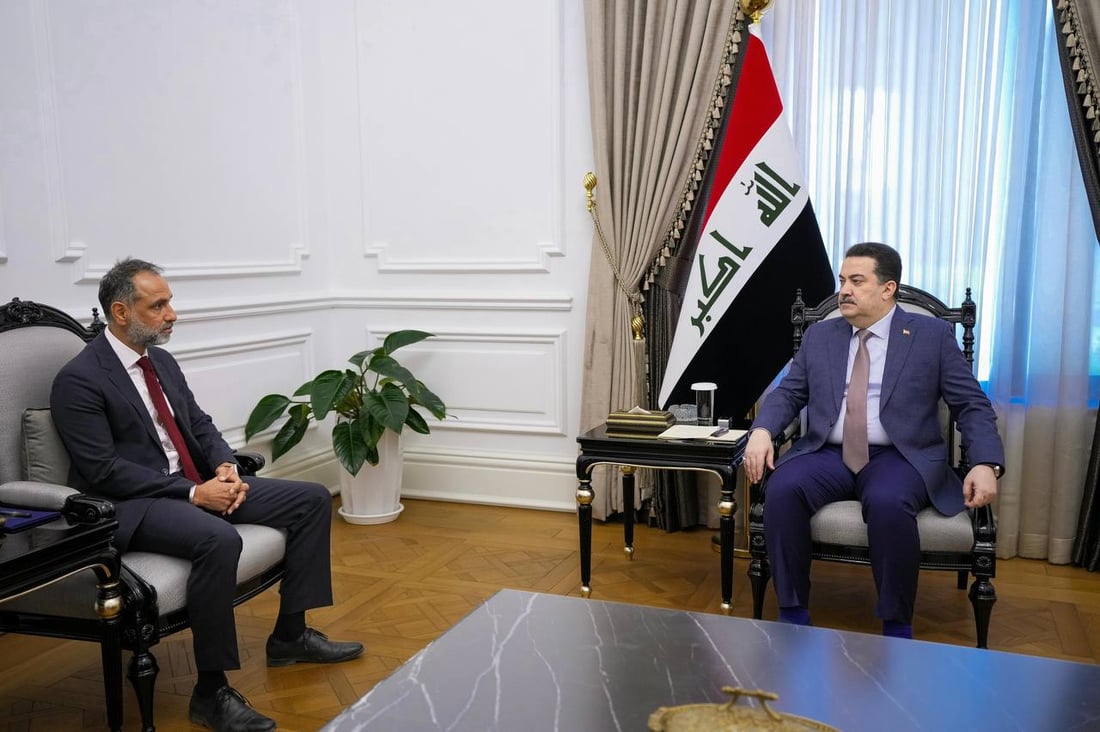
(Photo: Al-Sudani's media office)
Monitor
Al-Sudani urges the UN Security Council to halt Israel-Iran conflict
BAGHDAD — Prime Minister Mohammed Shia Al-Sudani met with British Ambassador to Iraq Irfan Siddiq on Saturday to discuss ongoing Israel-Iran conflict and prospects for strengthening bilateral cooperation, according to a statement from Al-Sudani’s media office.
During the meeting, Al-Sudani reiterated Iraq’s opposition to “violations of its sovereignty” and the use of its airspace in what he described as “the ongoing Zionist aggression against the Islamic Republic of Iran,” calling it a “threat to international peace and security.” He also urged permanent members of the UN Security Council to take action to stop the conflict in Iran and Gaza.
The Iraqi Foreign Ministry on June 13 said it had filed a formal complaint to the United Nations Security Council, calling on the Council “to take legal and moral action” against what it described as Israeli incursions into Iraqi airspace. “These practices represent a flagrant violation of Iraq’s sovereignty,” the ministry said.
Statement from Al-Sudani’s media office:
Prime Minister Mohammed S. Al-Sudani met today, Saturday, the British Ambassador to Iraq, Mr. Irfan Siddiq .
The meeting included discussions on developments in the region, prospects for joint cooperation, and ways to strengthen and expand bilateral relations across various fields in a manner that serves the mutual interests of both friendly countries.
His Excellency reaffirmed Iraq’s rejection of the violation of its sovereignty and the use of its airspace in the ongoing Zionist aggression against the Islamic Republic of Iran, which he described as a threat to international peace and security.
Prime Minister Al-Sudani stressed the importance of major powers, especially permanent members of the UN Security Council, playing their role in halting the aggression, whether against Iran or in relation to the daily massacres being committed by the occupation forces in Gaza. He also underscored the urgent need to allow humanitarian aid into areas where civilians are under siege.