
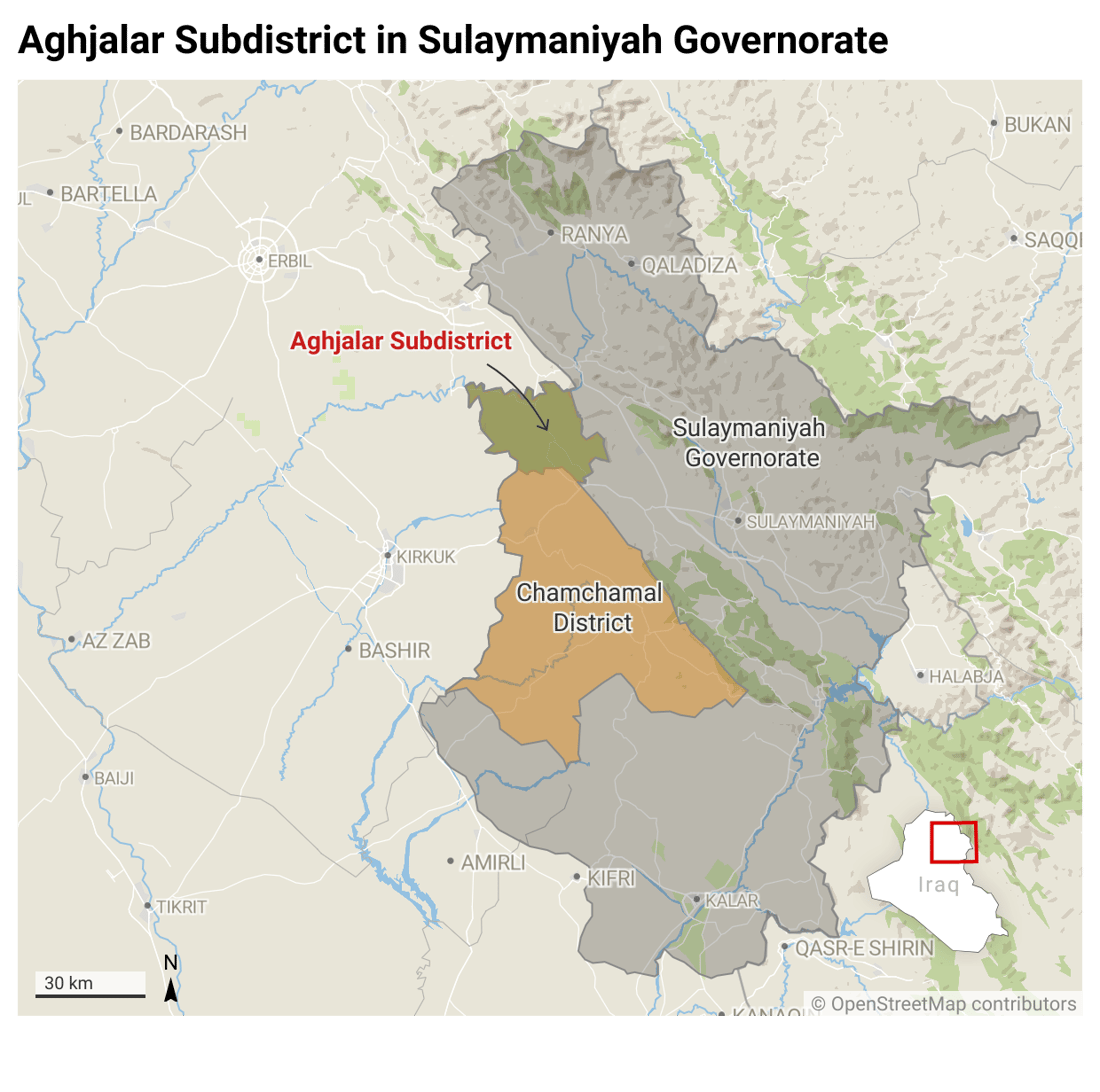
In Chamchamal's Aghjalar
Kurdish gardener reforests village despite long-term health issues from chemical exposure
AGJALAR — For more than three decades, Anwar Sleman, a gardener from Askar village in Chamchamal’s Aghjalar sub-district, has endured health issues due to exposure to chemical weapons during Saddam Hussein’s Anfal campaign. Despite his ongoing struggles, Sleman has transformed his village’s landscape, planting thousands of trees over five kilometers around Askar.
Sleman told 964media, “My only aim was to please God, and I don’t want anyone to praise me for it.”
His commitment to greening the area has been fueled by both spiritual motivation and a desire to contribute to his village’s well-being. “For more than 15 years, I have been engaged in planting these trees,” he added.
Sleman’s family, also impacted by chemical exposure, has sought medical treatments for over two decades. Despite his health challenges, Sleman reported gradual improvement, stating, “Thankfully, I’m better than I was.”
The villages of Askar and nearby Goptapa were among those hit by chemical bombs 36 years ago as part of Saddam Hussein’s Anfal campaign, a genocidal operation targeting the Kurdish population. Between February and September 1988, an estimated 50,000 to 100,000 Kurds were killed, with some Kurdish sources suggesting the death toll may have reached as high as 182,000, according to Human Rights Watch.
Sleman noted that his efforts are also driven by a desire to restore trees lost in wildfires and droughts. He has personally replanted trees affected by these environmental challenges and continues to maintain two nurseries with over 13,000 trees, including olive, pomegranate, fig, and pine. In particular, more than 7,000 olive trees now line the areas near his village, a testament to his enduring commitment to the environment and community.