
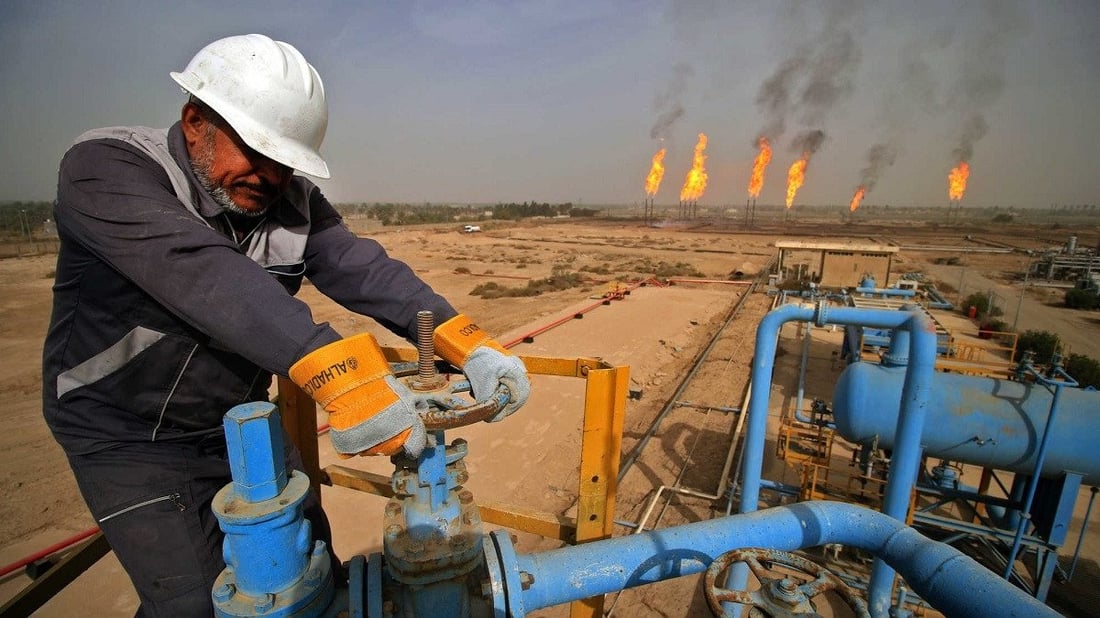
An oil worker operates a valve at an oil field in Iraq, with gas flares burning in the background.
Economist urges Oil Ministry not to buy tankers at wartime prices
BAGHDAD — Economist Ziad al-Hashimi urged Oil Minister Basim Khudair to hold off buying large oil tankers, warning that the ministry would be paying record prices in a market inflated by the U.S.-Iran war, a day after Khudair said he was seeking funding to buy vessels for the state-owned Iraqi Oil Tankers Company.
“When you consider buying giant oil tankers, do not make such a decision while the market is going through an emergency and exceptional situation and the region is at war,” Hashimi wrote on Facebook. “The high demand for transporting oil now will not remain the same after the crisis ends.” Demand for ships was at historic highs, prices at record levels and delivery times stretching to years, he said. “A decision like this at this time means buying ships at inflated prices above normal market prices.”
He said the ministry should compare freight rates before and during the crisis, show it had a business model that could win customers and stay profitable, and assess whether Iraqi staff had the commercial experience to market services and negotiate internationally. It should also check whether the International Maritime Organization accepts certificates held by graduates of the Iraqi Maritime Academy, he said, citing recent indications of restrictions on competency and safety standards. He warned that shipbuilding contracts carried risks of commissions, side agreements, corruption and inflated prices, and proposed starting with time charters or contracts of affreightment to build experience first. “What matters is not that it is said Iraq has a maritime fleet like other countries,” he said. “What matters is not rushing into such a strategic decision simply as a reaction to an exceptional crisis in the global oil market or as a result of some domestic demands.”
The ministry has not said how many tankers it wants, what they would cost or when. Iraq has relied almost entirely on chartered foreign tankers to move crude and products. SOMO sells crude free on board at the port and the tanker companies then negotiate passage with whoever controls the Strait of Hormuz, government spokesperson Haider al-Aboudi said last week, adding that Iraq has no exemption to move its oil through the strait.
Exports collapsed from more than 99 million barrels in February to 18.6 million in March and fewer than 10 million in April after shipping through Hormuz was disrupted. They recovered to about 2.35 million barrels a day in August, according to SOMO, and averaged about 2.6 million in September as of Sept. 21, against 3.3 to 3.5 million before the war. Iraq has leaned on the northern route through Turkey and tanker transfers outside the strait, signed a memorandum with Syria in July on a pipeline to Baniyas and agreed with Turkey in August on a minimum of 750,000 barrels a day through Ceyhan.
The purchase would come as revenues covered only 76% of salaries and welfare spending in the first seven months of the year, economist Nabil al-Marsoumi.