
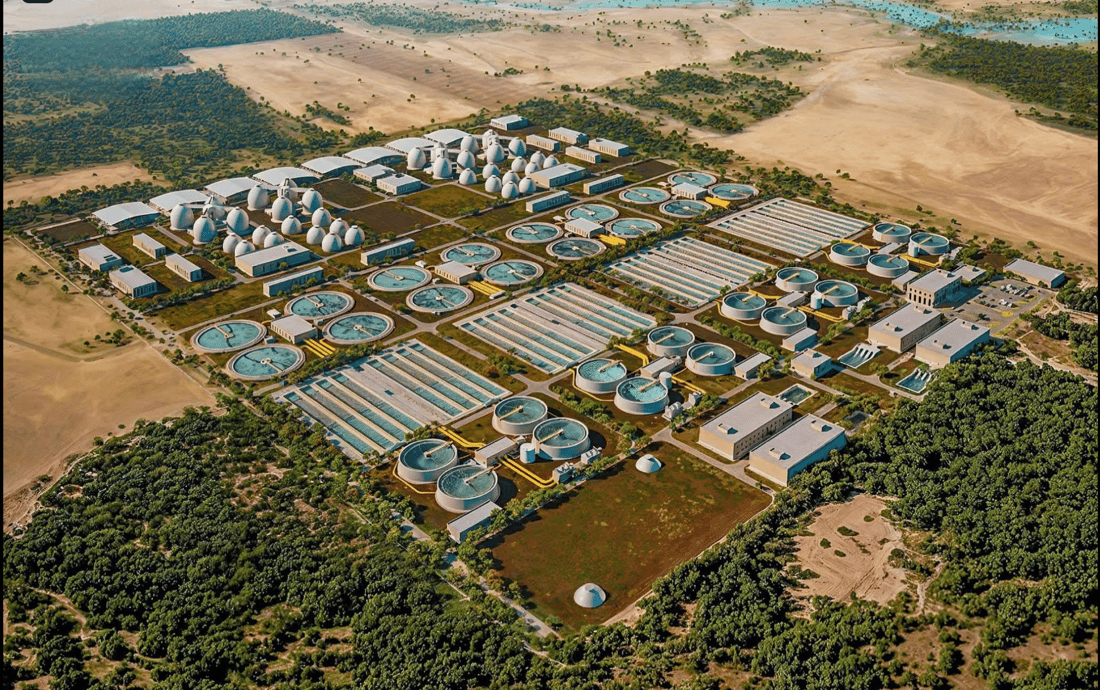
A rendering shows the design of Erbil’s large-scale wastewater treatment complex, built on 205 dunums (about 50 acres) as one of the Kurdistan Region’s largest environmental infrastructure projects.
Erbil breaks ground on phase two of $579m wastewater project
ERBIL — Kurdistan Regional Government Prime Minister Masrour Barzani on Sunday laid the foundation stone for the second phase of Erbil’s wastewater treatment project, calling it a major step toward cleaner water, sustainable irrigation, and long-term environmental protection.
Speaking at the ceremony, Barzani said the project is being carried out by the Ministry of Municipalities and Tourism in partnership with the local company Awzan, and noted that “one of the eight units of this project will be implemented, with gratitude, by Japan’s JICA agency.” He said he hoped work on the JICA-assigned unit would begin soon.
Barzani said the system will “prevent the mixing of wastewater with natural water sources and groundwater, and reduce contamination and waterborne diseases,” adding that treated water will be reused to support agriculture, public greenery, and the region’s broader environmental goals. He said the project will ease pressure on groundwater reserves and provide “the best source of irrigation for parks and green spaces,” supporting initiatives such as the Green Belt and Life Path.
He said the government intends to bring similar projects to other cities across the Kurdistan Region as part of plans to improve services, protect natural resources, and strengthen public health. He expressed hope the Erbil project would be completed on schedule and “be a source of good and happiness for the people of Erbil and all of Kurdistan.”
The wastewater plant is described by the KRG as one of the region’s largest environmental infrastructure programs, with a budget of $579 million. Built on 205 dunums in western Erbil, it is designed to treat 840,000 cubic meters of wastewater per day and serve the city for the next 30 years, with capacity for population growth.
Officials say the facility will help prevent groundwater depletion, curb waterborne diseases, support cleaner agriculture, and bring Erbil closer in line with international environmental standards.


