
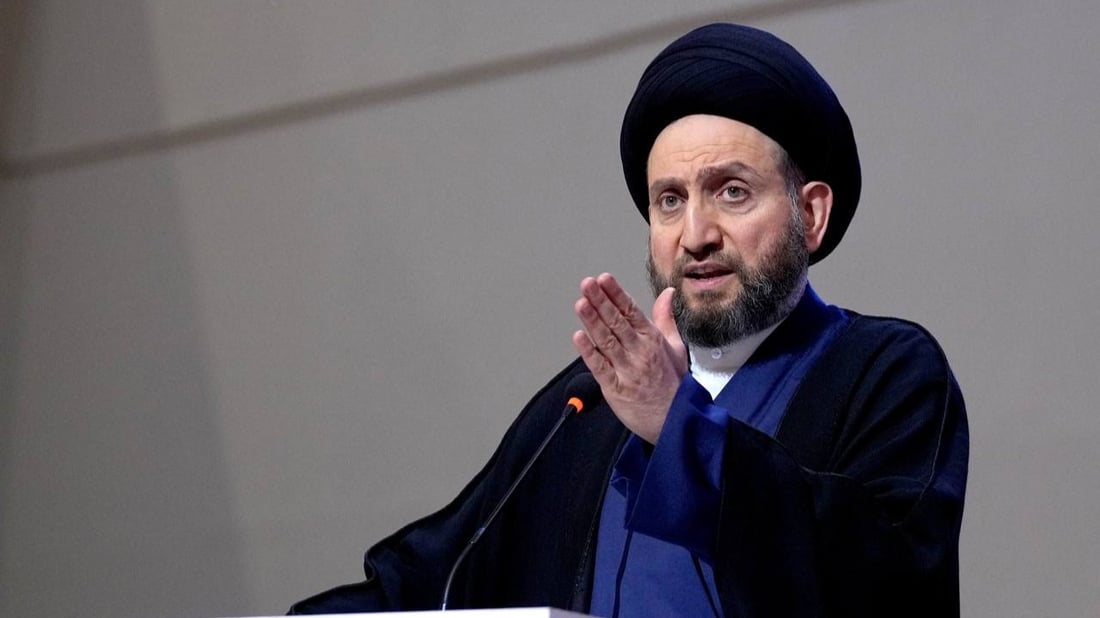
Ammar Al-Hakim, head of the Hikma Movement
Media Monitor
Hakim says US made ‘very clear’ the cost of not complying on Iranian flights
BAGHDAD — Washington made “very clear” to Baghdad the consequences of not complying with the restrictions on Iranian flights, Hikma leader Ammar al-Hakim said, the most direct acknowledgment by a senior figure in the governing alliance of U.S. pressure behind the halt.
“The American messages that reached Iraq were very clear about the scale of the consequences of failing to comply with the airspace ban. We are working to balance the requirements of protecting the state with taking public sentiment into consideration,” he told Al-Iraqiya News. “Some decisions are taken with the aim of protecting the Iraqi people from sanctions and not to spite anyone.”
Government spokesperson Haider al-Aboudi said on Monday that “no decision was issued by the Iraqi government to ban Iranian aviation,” attributing the halt to private ground-handling companies.
Iraq was the first country to receive a U.S. exemption allowing Najaf airport to deal with Iran, Hakim said, thanking the government “and those who helped resolve the issue.” Iraqi Airways said on Tuesday it would resume flights to Iran in October from Najaf under an exemption that covers only the Iraqi carrier, while Iranian airlines remain barred. “Iraq has special circumstances, and we understand some of the positions of Iranian officials,” Hakim said. “The war against Iran had major repercussions, and we stand in solidarity with its people against sanctions, while we are keen to spare our Iraqi people from them. The Iraqi people suffered bitterly from sanctions in previous decades.”
Iraq was working to repair relations with its neighbours after recent events, he said, adding that Gulf states had not withdrawn their ambassadors. Saudi Arabia and Kuwait have accused Iraqi armed factions of attacking them since the war on Iran began, and drones launched from Maysan hit a Saudi oil pipeline this month.
The Coordination Framework has 14 member groups, he said, and “the Coordination Framework’s statements reveal only the issues that have been agreed upon,” adding that it “does not represent all forces within the largest component,” meaning Iraq’s Shia community. He said 84 countries in the coalition had helped Iraq defeat the Islamic State group.