
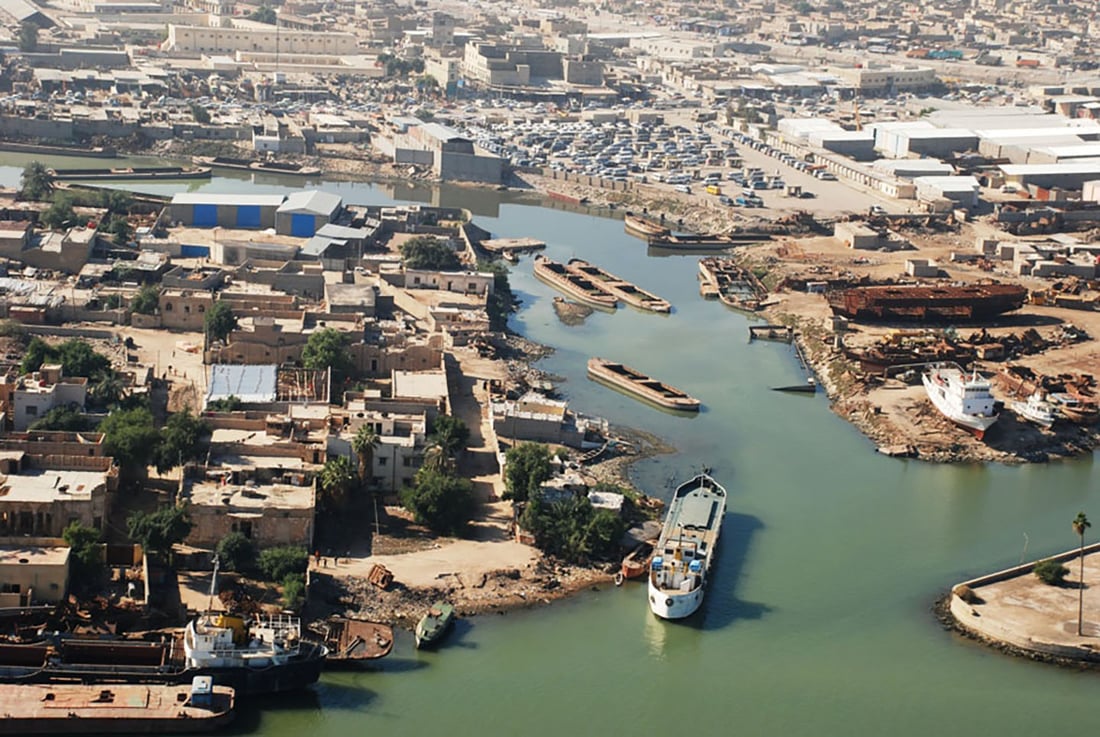
Aerial view of Basra
Basra Gas Company installs solar power in eight schools
BASRA — Basra Gas Company, in partnership with Al-Mayameen Humanitarian Foundation and in coordination with the Basra Education Directorate, has launched the “Manara” initiative to install solar power in a number of schools across Zubair, Safwan, and Khor Al-Zubair districts.
In its first phase, the project equipped eight schools with solar systems to reduce dependence on the national grid and ensure uninterrupted classes and online learning. The company said the initiative supports its community service program and is part of broader efforts to reduce emissions and promote clean energy in the education sector.
Marfa Al-Asadi, deputy managing director of Basra Gas Company, said the project was implemented under the slogan “Low emissions and a clean environment.” He added that the company has launched multiple initiatives in this area and described “Manara” as one of its most effective.
The company said the installations reflect a shift toward clean electricity and are expected to serve as the foundation for larger projects in the future, by Basra Gas Company or other entities. The company added that its broader efforts focus on gas collection and emissions reduction.
Basra Gas Company director Khaled Al-Bataineh said the project is part of the company’s social responsibility plan and that a second phase will include additional schools.
Musab Fadel, principal of Al-Najaat Primary School, said the project would prevent class disruptions and support electronic learning.
In late November, Prime Minister Mohammed Shia Al-Sudani chaired a meeting on accelerating renewable energy projects in Baghdad, with a focus on medium-scale solar stations and wider use of smart meters, his office said.
The discussion followed an October announcement by the Ministry of Industry and Minerals outlining plans for a factory capable of producing enough solar panels annually to generate 750 megawatts of power, a level the ministry says would meet domestic demand and support future exports.
Iraq continues to face chronic electricity shortages, particularly during summer months when temperatures often exceed 50 degrees Celsius (122 Fahrenheit). In August, Electricity Minister Ziyad Ali Fadel said Iraq reached a record production level of 28,000 megawatts through maintenance work, station upgrades and reliance on imported fuel.