
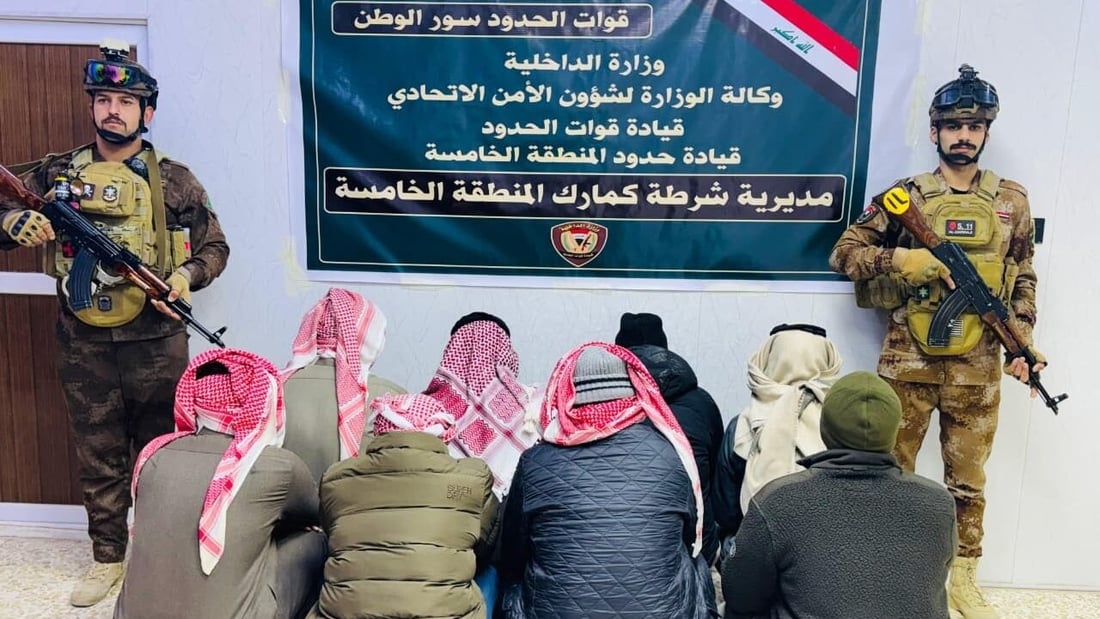
Iraqi Border Forces personnel stand behind detainees arrested for illegal hunting in the Najaf desert, according to an official statement by the Border Forces Command.
Iraqi Border Forces arrest eight for illegal hunting in Najaf desert
NAJAF — Iraqi Border Forces announced Saturday the arrest of eight people for illegal hunting in the desert of Najaf governorate, including seven Arab nationals and one Iraqi, during a security operation focused on enforcing regulations for foreign hunters entering the country.
In a statement, the Border Forces Command said, “Border Forces arrested seven people of Arab nationality practicing illegal hunting in the Najaf al-Ashraf desert.”
The command said the arrests were carried out by units from the Fifth Region Customs Police Directorate as part of “security work and intensive field monitoring.”
According to the statement, the detainees were found in violation of “the controls and conditions that regulate the entry of foreign hunters into the country and the practice of hunting inside Iraqi territory.”
The Border Forces Command said, “The necessary legal measures have been taken against the violators in accordance with the applicable instructions.”
The Iraqi Interior Ministry said it will continue enforcing the law without exception. “The ministry confirms its continued application and enforcement of the law on everyone without exception, and not allowing any violation of the controls and instructions issued by the competent authorities,” the statement said.
The Interior Ministry has tightened oversight of foreign hunting activities under regulations governing Arab and foreign falcon hunters. Ministry spokesperson Brig. Gen. Miqdad Miri said the hunting season opens on Dec. 1 and runs until Feb. 1 each year.
Miri said each licensed group may include up to five hunters for a permit fee of $125,000, while groups of up to 15 hunters must pay $325,000. He said fees double for any hunting conducted outside approved regulations. Permits are issued electronically through the Interior Ministry’s e-visa system and must be submitted by licensed companies through the Directorate of Private Security Companies Affairs, along with security clearances and service contracts.
Hunting is restricted to designated areas in the governorates of Najaf, Diwaniyah, Muthanna, Maysan, Dhi Qar, Basra, and parts of Nineveh, Kirkuk, and Salah al-Din. Applicants are required to provide hunters’ names, nationalities, passport copies, and details of falcons and equipment, while companies are responsible for compliance with environmental and safety rules. The ministry warned that violations could result in permit revocation and fines of up to $400,000.
Under hunting rules issued in October 2024, Arab and foreign hunters must obtain special visas through licensed Iraqi security companies and pay a $20,000 permit fee, with each hunter allowed up to two falcons and additional fees for extra birds. The regulations, based on National Security Council Decision No. 19 of 2023 and Wildlife Protection Law No. 17 of 2010, hold companies accountable and impose doubled fees, legal penalties, and possible bans for violations.