
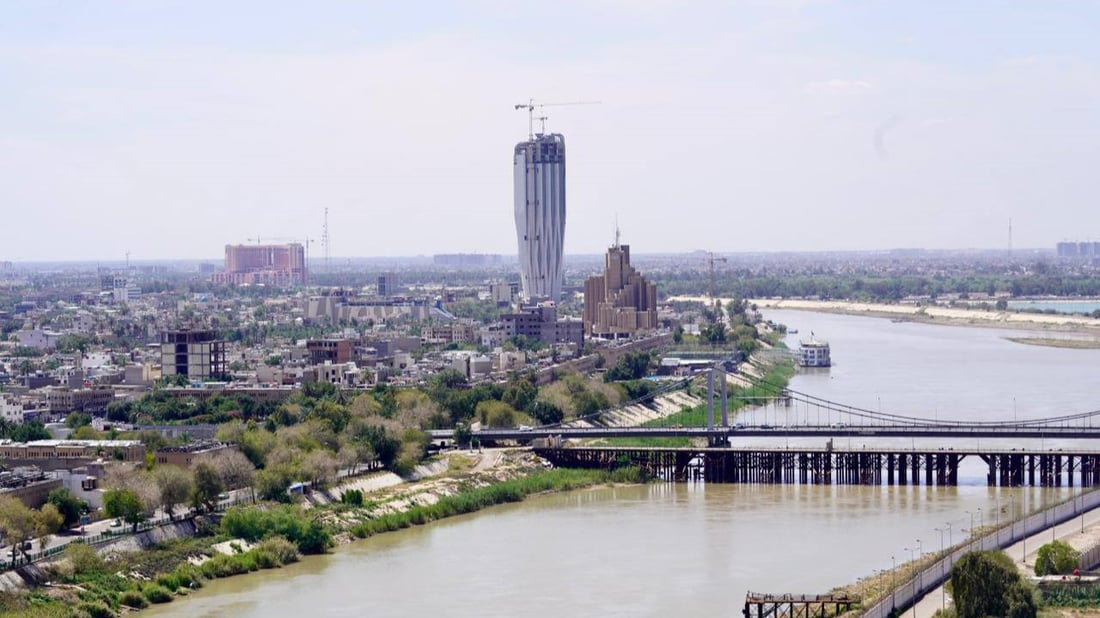
A view of central Baghdad
Traffic police to patrol neighborhoods under new plans
BAGHDAD — Iraq’s General Traffic Directorate has rolled out a new field plan that places officers inside residential neighborhoods as well as on major roads, aiming to expand monitoring, reduce accidents and ease congestion nationwide.
Uday Sameer, head of the directorate, told the state-owned Al-Sabah newspaper that the plan establishes “a permanent field presence for our personnel in all regions, including peripheral areas and internal neighborhoods.” He said the approach is designed “to expand traffic coverage and achieve comprehensive monitoring of both internal and external roads, contributing to smoother traffic flow and round-the-clock regulation.”
The initiative is backed directly by the interior minister and includes additional personnel and equipment to support the new deployment strategy.
Sameer said the country has seen “a noticeable decline in traffic accident rates in the recent period compared to the previous year,” describing the trend as a positive sign. In June, Iraq’s Ministry of Planning reported a 10% drop in traffic fatalities in 2024 compared with 2023. The ministry recorded 11,763 incidents nationwide, excluding the Kurdistan Region, including 2,103 fatal crashes that caused 2,719 deaths, down from 3,019 the previous year. Men accounted for 82% of the fatalities, with 2,235 recorded deaths.
He said improving road safety requires coordination across government and the public. “Safe roads and a stable route for citizens cannot be achieved without the integration of efforts between drivers on one hand, and ministries and service agencies on the other, in addition to local governments,” he said.
Sameer added that traffic officers will increasingly operate inside residential districts, noting that serious violations such as “reckless driving, negligence, running red lights, and driving against traffic” remain major contributors to deadly accidents.
Traffic incidents injured 11,896 people in 2024, a 3.4% decrease from the previous year, though officials say speeding, distracted driving, deteriorating infrastructure and weak enforcement continue to pose significant risks.