
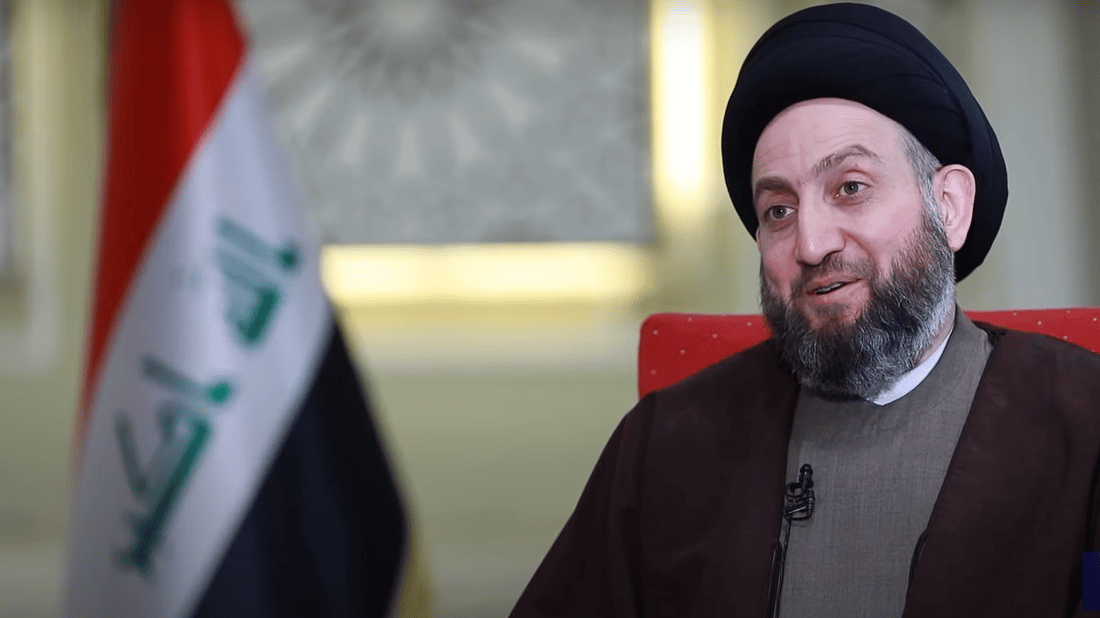
Ammar Al-Hakim, head of Al-Hikma Movement
Media Monitor
US envoy’s Iraq meetings unrelated to cabinet talks, says Al-Hikma official
BAGHDAD — Fahd Al-Jubouri of the Ammar Al-Hakim-led Al-Hikma Movement said on Sunday that recent claims suggesting U.S. involvement in forming Iraq’s next government are unfounded, insisting that no such proposals have been raised in political talks.
“The U.S. envoy has a significant relationship with many political figures, and he has visited and met with them, including some meetings that were confidential and not covered by the media,” Jubouri said in an interview with Al-Nahrain TV.
“However, the recent talk that he will contribute to forming the government, or that he will have veto power or approval over candidates for the premiership — all of this is inaccurate, has not been discussed, and has never been brought up,” he added.
Jubouri said U.S. envoy Mark Savaya had previously met some Coordination Framework leaders before his appointment and had participated in a foreign delegation discussing the case of kidnapped Russian-Israeli national Elizabeth Tsurkov.
He said Savaya “has remained active but is currently outside Iraq,” adding that “he is working on forming a group of advisors and a specific team inside Iraq.” Jubouri also pointed to the challenges ahead for Washington’s approach to Baghdad, noting that “he has many observations on the issue of armed factions… a large portion of those who won seats are close to the armed factions. So how will the mechanism of dealing with the government be in the upcoming period?”
Excerpts from Fahd Al-Jubouri interview with Al-Nahrain TV:
The U.S. envoy has a significant relationship with many political figures, and he has visited and met with them, including some meetings that were confidential and not covered by the media. However, the recent talk that he will contribute to forming the government, or that he will have veto power or approval over candidates for the premiership — all of this is inaccurate, has not been discussed, and has never been brought up.
Savaya met with some leaders of the Coordination Framework, yes, but this was previously, before he was appointed as an envoy, and he came with a foreign delegation to discuss the case of the kidnapped Russian woman.
Savaya has been active, but he is currently outside Iraq. He is working on forming a group of advisors and a specific team inside Iraq. He has many observations on the issue of armed factions and the structure, and even at the level of the current government situation, a large portion of those who won seats are close to the armed factions. So how will the mechanism of dealing with the government be in the upcoming period?
Messages have come from the American side to Iraq that it will not deal with any government formed by weapons. According to Mr. Hakim and the movement, we do not want to clash with our brothers, nor do we want to go in a direction that harms Iraq’s higher interest, because we know what the American response will be on this matter.
Many of the images reaching the American administration about the internal situation in Iraq are not accurate. The arrival of Savaya will be an opportunity for the Framework and the Iraqi system to benefit from.
Portraying the image of Iraq is conveyed by several voices, not just one. In any case, this matter is up to the government, and there will be many developments in this regard. As for foreign relations and the Foreign Ministry, I believe it will be taken from one component and given to another.
We are part of the Framework and its decision, and there will be a meeting in two days.
Sudani’s statement about his openness to political forces for forming alliances — who are these open parties? The Framework? Or Reconstruction and Development? Or who? This gives me the impression that he is outside the Framework.