
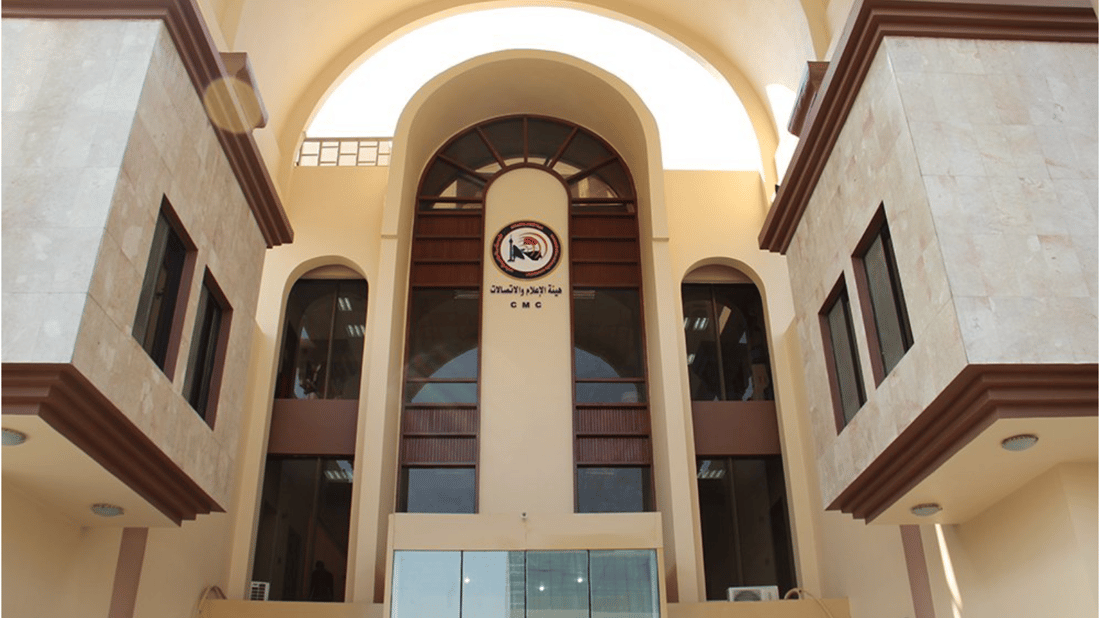
The headquarters of Iraq’s Communications and Media Commission in Baghdad.
New report
ARTICLE 19 raises alarm over Iraq’s digital censorship via social media platforms
BAGHDAD — ARTICLE 19 has raised concerns over increasing collaboration between Iraq’s Communications and Media Commission and social media companies, including Meta and TikTok, warning that the partnership is enabling online repression of journalists, political critics, and human rights defenders.
The organization, named after Article 19 of the Universal Declaration of Human Rights about the right to freedom of expression, was registered in London in February 1987.
On Oct. 23, the organization stated that cooperation with Iraqi authorities has led to censorship and arbitrary content removal. “Social media companies, particularly Meta and TikTok, must ensure that cooperation with State bodies doesn’t lead to arbitrary content removal, censorship, or discrimination against journalists, activists, and political opposition voices. ,” ARTICLE 19 said in a statement.
964media reached out to Haider Najm Al-Alaq, spokesperson for the CMC, for comment but has not received a response.
According to Meta’s latest transparency report, the CMC has issued repeated requests to geo-restrict posts and accounts within Iraq, citing broad legal provisions such as “insulting or defaming public officials.” In October 2025, Meta confirmed it restricted two Facebook posts alleging judicial corruption after the CMC threatened to impose advertising bans and block Central Bank payments if the company refused to comply.
ARTICLE 19 said these actions “undermine the right to freedom of expression guaranteed under Article 38 of the Iraqi Constitution and Article 19 of the International Covenant on Civil and Political Rights, to which Iraq is a party.”
In its transparency report for July to December 2024, TikTok stated that it received 454 takedown requests from the Iraqi government, resulting in 410 removals or geo-blocks. Of these, 200 were attributed to violations of TikTok’s Community Guidelines, while 210 were linked to local law compliance.
In late-March, Iraq’s Communications and Media Commission announced new regulations requiring social media influencers and digital content creators to register annually and pay fees based on their follower counts. The move is part of a wider effort to increase oversight of online activity and target what authorities call “indecent content.”
The announcement followed Iraq’s intensified campaign against what it labels “indecent content,” which began in last year, and led to multiple arrests.