
Iraq, Iran move forward with talks to open new border crossing in Maysan
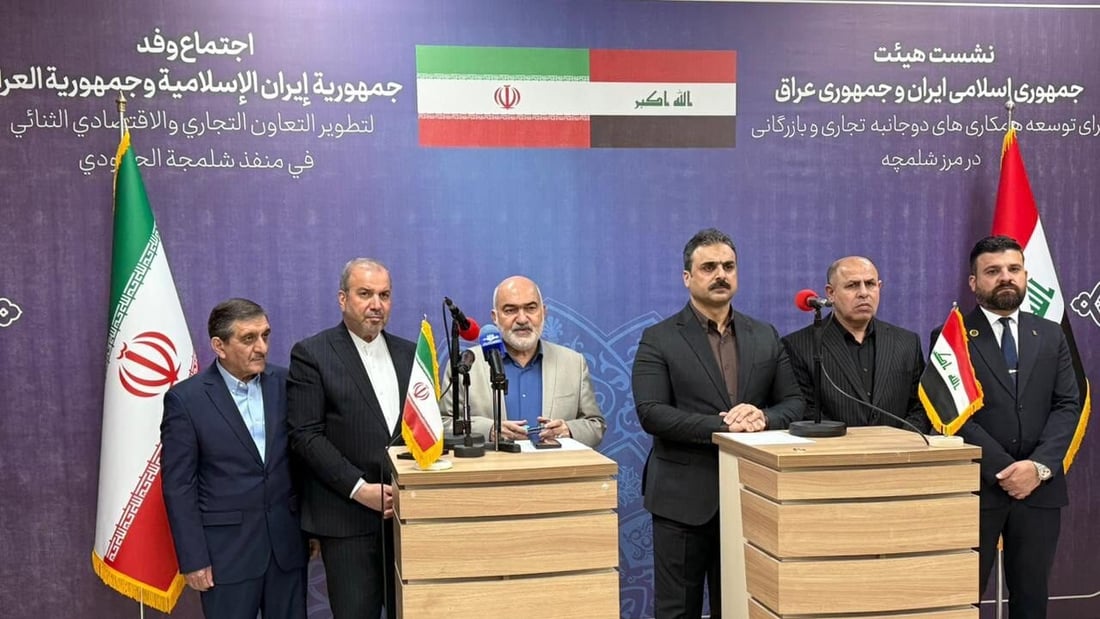
MAYSAN – An Iraqi government delegation led by the head of the Border Ports Authority visited Iran this week to discuss plans for a new border crossing in Maysan governorate, about 30 kilometers from the Iranian city of Ilam.
The visit included meetings with Iranian officials, a joint field inspection of the proposed site at Ali al-Gharbi, also known as Jalat, and discussions on the necessary legal steps. The Border Ports Authority said coordination on the project will continue through diplomatic channels.
The visit was conducted “in implementation of the directives of the prime minister, which emphasize the field presence of government department heads to directly follow up on their subordinates’ work in order to serve citizens, facilitate trade exchange, and find rapid solutions to any obstacles,” the authority said.
On Oct. 2, the delegation, joined by Maysan Governor Habib al-Fartousi and Haqi al-Sharifi, director general of travel and borders in the Intelligence Service, met with Iranian officials including the governor of Ilam Province and Iran’s ambassador to Iraq, Mohammad al-Sadiq, in Dehloran, Ilam Province. Both sides agreed to form a joint technical committee to begin legal procedures for establishing the Ali al-Gharbi–Jalat crossing.
The team also visited the proposed site to review the terrain and access routes on both sides of the Iraq–Iran border.
Iraq’s 1,600-kilometer border with Iran currently includes nine official crossings, among them Shalamcheh, Mehran/Zurbatiyah, and the regional gateways of Parwiz Khan and Haji Omaran in the Kurdistan Region.
On Oct. 4, the Iraqi delegation, accompanied by senior customs and provincial officials, traveled to Iran’s Khuzestan Province and the Arvand Zone at the invitation of Iranian authorities. The meetings concluded with the signing of several memorandums outlining procedures and frameworks for future cooperation, which the Border Ports Authority said “will play a positive role in strengthening trade in line with the requirements of the World Trade Organization.”