
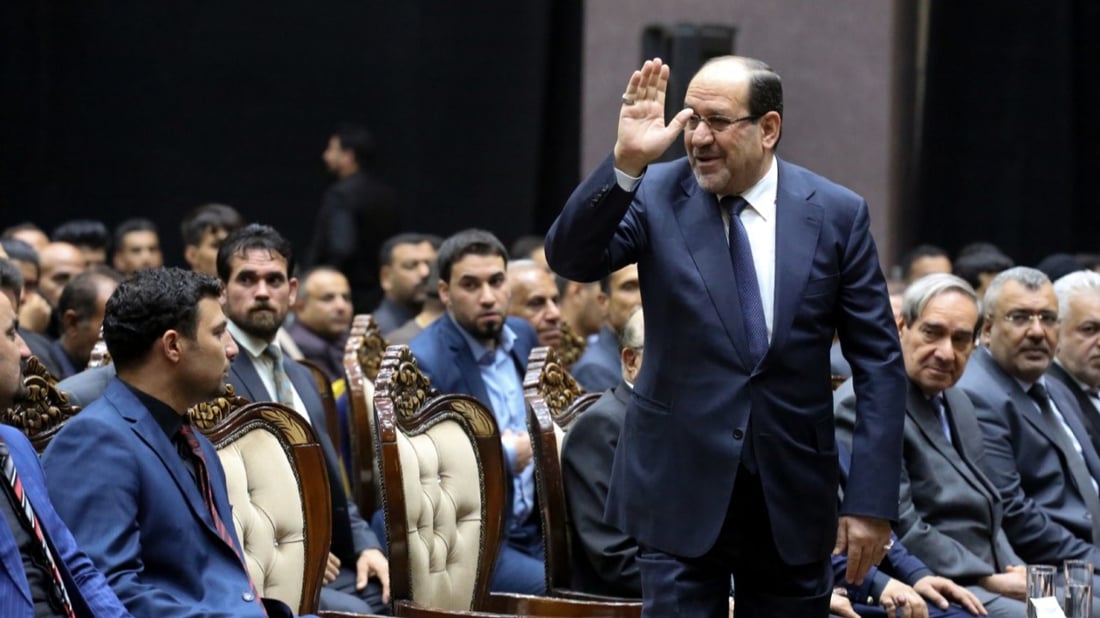
Nouri Al-Maliki, head of the State of Law Coalition, greets attendees during a political gathering in Baghdad.
Media Monitor
State of Law downplays Sadrist boycott ahead of November elections
BAGHDAD — State of Law Coalition member Ammar Al-Shibli said the Sadrist movement’s decision to boycott Iraq’s upcoming parliamentary elections will not affect the political balance, citing data from the 2021 elections that showed the group accounted for 10% of the total electorate.
“Their boycott will not affect the balance of representation among communities,” Al-Shibli said in an interview with Al Rabiaa TV. “A representative example of this is what happened in the provincial council elections, where nothing changed in terms of component representation.”
He said former Prime Minister Nouri Al-Maliki, who is the leader of State of Law Coalition, remains committed to holding elections on schedule, November 11, and respects the right to political participation or boycott. “The western governorates will choose their representatives, and Baghdad and the southern governorates will choose theirs,” he added.
Al-Shibli criticized attempts by the Sadrist movement to discourage participation. “They should not call on others to boycott,” he said, adding that the group still holds official roles in government despite its public withdrawal from politics. “It is still part of this government, holding the position of Secretary General of the Council of Ministers, five deputy minister positions, 87 director general positions, including the director of ports.”
He said Muqtada al-Sadr’s decision to withdraw is not based on religious grounds. “He is neither a jurist nor a religious authority. His positions are based on political interest,” Al-Shibli said. “
Al-Sadr has reiterated his call to boycott the upcoming elections. Sadrists won 73 of parliament’s 329 seats in the October 2021 elections, forming the largest bloc. Al-Sadr pushed to form a majority government excluding Iran-aligned factions, but his efforts failed, and he ordered his MPs to resign. Their departure triggered a political deadlock that ended with the formation of a consensus government dominated by rival Shiite groups.
Excerpts from Ammar Al-Shibli’s interview with Al Rabiaa TV:
The Sadrist movement’s voter base is around 800,000 voters according to data from the Electoral Commission for the 2021 elections, during which the total number of voters was 8 million. This means that the movement’s supporters represent 10% of the electorate. Their boycott will not affect the balance of representation among communities. A representative example of this is what happened in the provincial council elections, where nothing changed in terms of community representation.
Mr. Maliki confirms that elections will be held on schedule and does not accuse those who choose to boycott of betrayal. Others have the right to exercise their political rights through participation or boycott. The western governorates will choose their representatives, and Baghdad and the southern governorates will choose theirs.
The Sadrist boycott is not impactful, but they should not call on others to boycott. The movement has participated in the political process from 2006 until 2021, and even over the past four years, despite its discontent and boycott. It is still part of this government, holding the position of Secretary General of the Council of Ministers, five deputy minister positions, 87 director general positions, including the director of ports. The latter’s success is the government’s success, and his failure is its failure, because Basra is Iraq’s economic backbone.
Sayyid Muqtada Al-Sadr’s decision to boycott is neither a religious nor doctrinal matter. He is neither a jurist nor a religious authority. His positions are based on political interest, and at one time he swore a great oath not to participate in the elections, yet he later did because he deemed it politically beneficial. Linking these positions to notions of halal and haram is incorrect. The public is aware and knows its interests, and the religious authority’s call to choose the best candidate implies an endorsement of participation.
We previously stated through the spokesperson of the State of Law Coalition that we had reservations about Mr. Al-Sudani. However, tomorrow, if he wins, there might be a different stance. But I assure you, the next government will be formed faster than expected, and the issue of the parliamentary presidency will be resolved quickly, even before that.