
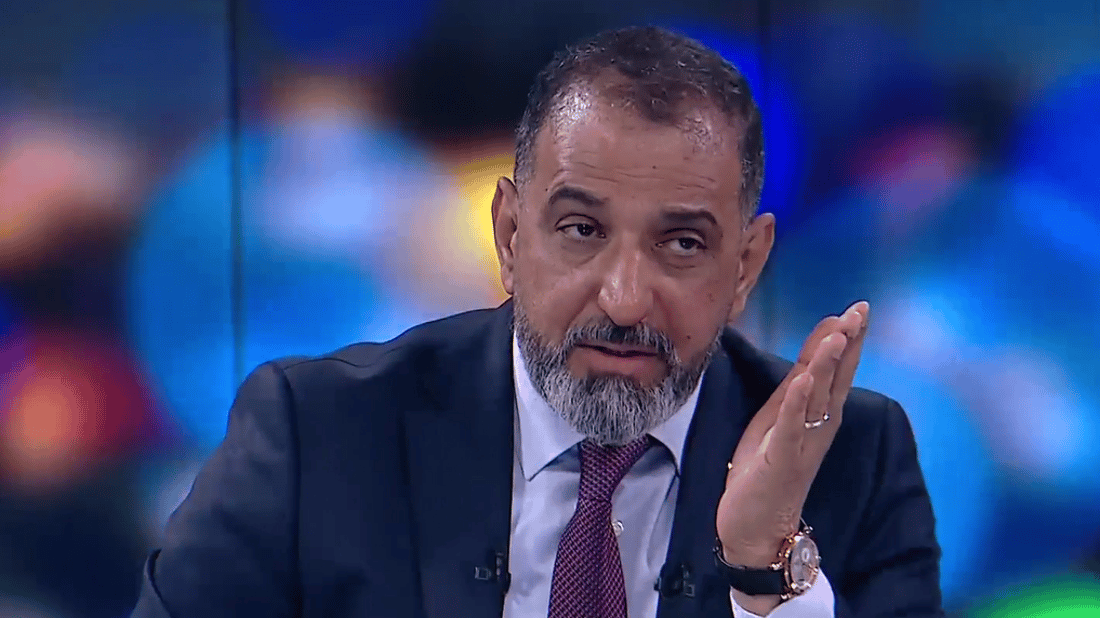
The State of Law Coalition spokesperson Aqil Al-Fatlawi
Media Monitor
State of Law spokesperson criticizes Al-Sudani’s leadership, rejects second term
BAGHDAD — The State of Law coalition led by former Prime Minister Nouri al-Maliki said it will not support Prime Minister Mohammed Shia al-Sudani for a second term, citing what it described as a collapse of internal partnership and disregard for parliament’s oversight role.
“We are not convinced by the partnership model offered by al-Sudani,” coalition spokesperson Aqil al-Fatlawi told Alahad TV. “The prime minister does not give importance to the subject of partnership, even though it is a very important matter.”
Al-Fatlawi accused the government of sidelining the Council of Representatives and concealing budget details. “The legislative and oversight role of the Council of Representatives is absent due to the actions of this government, in an unprecedented manner in all previous governments,” he said.
He also criticized Sudani’s foreign policy and meetings carried out without consultation with coalition partners. “Relying on external actors is an indicator of Sudani’s government, and the lack of attention to internal partnership has caused us to lose trust,” al-Fatlawi said.
He concluded: “We reject Sudani taking on a second term due to the indicators I mentioned and other indicators.”
The remarks come as Iraq prepares for parliamentary elections on Nov. 11, 2025. Similar criticisms have surfaced within the Coordination Framework, including from armed factions. On Aug. 11, Kataib Hezbollah accused Sudani of “falsifying” findings of a government inquiry into a July 27 attack in Baghdad’s Dora district that killed a federal police officer and injured at least 15 people.
Following that incident, Kataib Hezbollah Secretary-General Abu Hussein al-Hamidawi called on the Coordination Framework to suspend Sudani’s executive powers until the end of his term, citing an erosion of ‘trust’.
Excerpts from Al-Fatlawi’s interview with Alahad TV:
We are not convinced by the partnership model offered by Al-Sudani.
The prime minister does not give importance to the subject of partnership, even though it is a very important matter, since this government was born from the womb of the Coordination Framework and ultimately became part of the State Administration Coalition, so we supported this government at the beginning.
The budget schedules so far do not exist, and the legislative and oversight role of the Council of Representatives is absent due to the actions of this government, in an unprecedented manner in all previous governments. This issue is dangerous because if this matter passes under the current concerning circumstances, what happens if the government gains a second term? It is possible that we may not receive the budget at all—it could be approved from there and go on without any attention paid to the Council of Representatives.
I say it frankly: relying on external actors is an indicator of Sudani’s government, and the lack of attention to the issue of internal partnership has caused us to lose trust. Therefore, moving toward gaining external approval—whether regional, European, or American—provokes the partners.
There is a difference between dealing with Syria calmly and according to its current reality, and taking a plane to Qatar and meeting with Al-Jolani secretly, away from my partners and the people who brought me to this position. I believe this is ingratitude toward the nature of the partnership and the trust of the State Administration Coalition, and of the Coordination Framework in particular.
The service effort serves only Mr. Sudani’s candidates, and large amounts were spent on it. That is why large numbers, even from the State of Law, went to Sudani’s bloc because they found that beneficial. A candidate, if he wants to pave a street—even if it does not serve many citizens—can do so, but the paving or installation of electrical transformers is done with a paper from the service effort, and these are things that Mr. Maliki does not provide, but Sudani does.
The Council of Representatives does not know the amounts for current projects, and I challenge any MP to send a letter to the relevant authorities requesting the cost of a specific bridge project—they will not respond, they will not answer him.
We reject Sudani taking on a second term due to the indicators I mentioned and other indicators.