
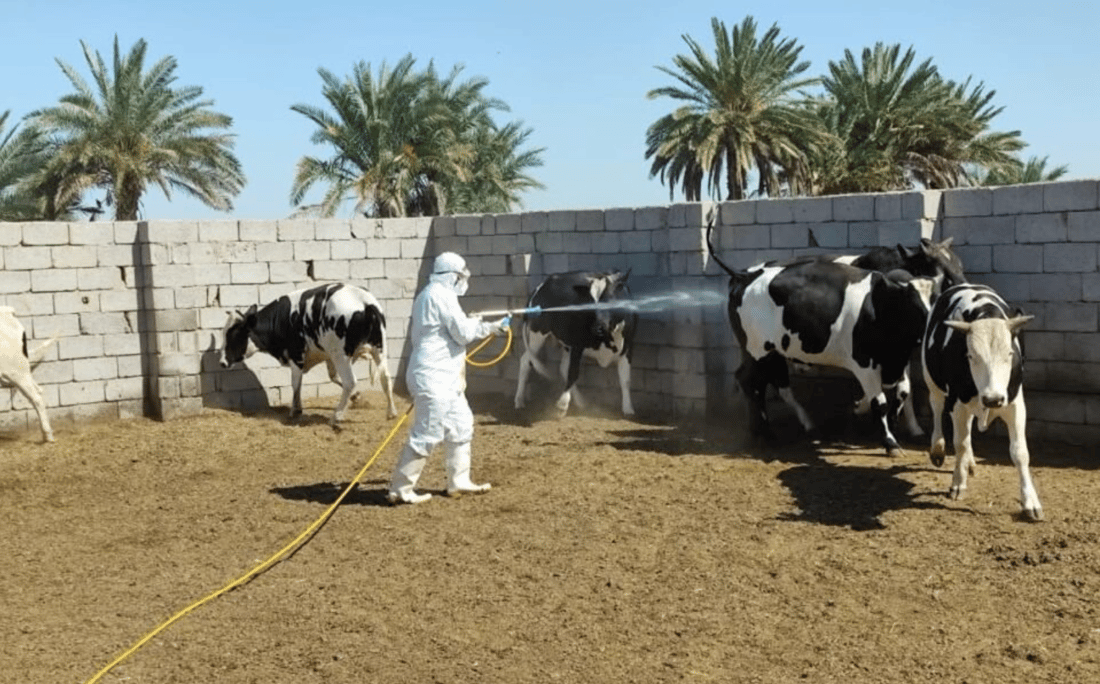
A veterinary worker sprays livestock with disinfectant during a tick control campaign
Health ministry figures
Iraq records 16 new hemorrhagic fever cases, 2 more deaths as 2025 total hits 231
BAGHDAD — Iraq’s Ministry of Health announced Monday that two more people have died from hemorrhagic fever and 16 new infections have been confirmed, bringing the country’s total for 2025 to 231 cases and 30 deaths.
Ministry spokesperson Seif Al-Badr told the Iraqi News Agency the latest deaths were reported in Dhi Qar and Wasit governorates. “Two deaths and 16 new cases of hemorrhagic fever have been recorded in recent days,” he said.
Dhi Qar remains the hardest-hit area, with 84 confirmed cases and four deaths. Baghdad’s Rusafa side has reported 32 cases and six deaths, followed by Muthanna with 20 cases and two deaths. Wasit has recorded 19 cases and three deaths, while Basra has seen 15 cases and one death.
Diyala has documented 12 cases and three deaths, Maysan 11 cases and one death, and Nineveh seven cases. Baghdad Karkh has reported six cases. Kirkuk and Diwaniyah have each reported five cases, with Kirkuk recording four deaths and Diwaniyah two.
Duhok has confirmed three cases and one death, while Babil has seen two cases and one death. Sulaymaniyah and Erbil have reported two cases each with no fatalities. Najaf and Salah Al-Din each reported two cases and two deaths. Anbar and Karbala recorded two and one case, respectively, with no deaths.
Al-Badr urged the public to adhere to safety measures, especially when handling livestock. “Meat should be purchased only from licensed butcher shops and slaughterhouses,” he said. “Livestock owners must wear protective clothing, gloves, and masks, and take care to remove ticks and avoid direct contact with animal hides, fluids, and waste.”
Early symptoms of hemorrhagic fever include high fever, fatigue, and exhaustion, he said. “The second stage, which is more dangerous, begins with bleeding from body openings and under the skin. Early detection is key to treatment and improving recovery chances.”
Al-Badr also emphasized food safety practices, such as using separate knives for meat, freezing at low temperatures, and thorough cooking. He called on citizens to maintain public hygiene and follow official regulations on grazing and animal slaughter.
“Handling infected animals and controlling tick infestations fall under the responsibilities of the Agriculture Ministry and security forces,” he added.