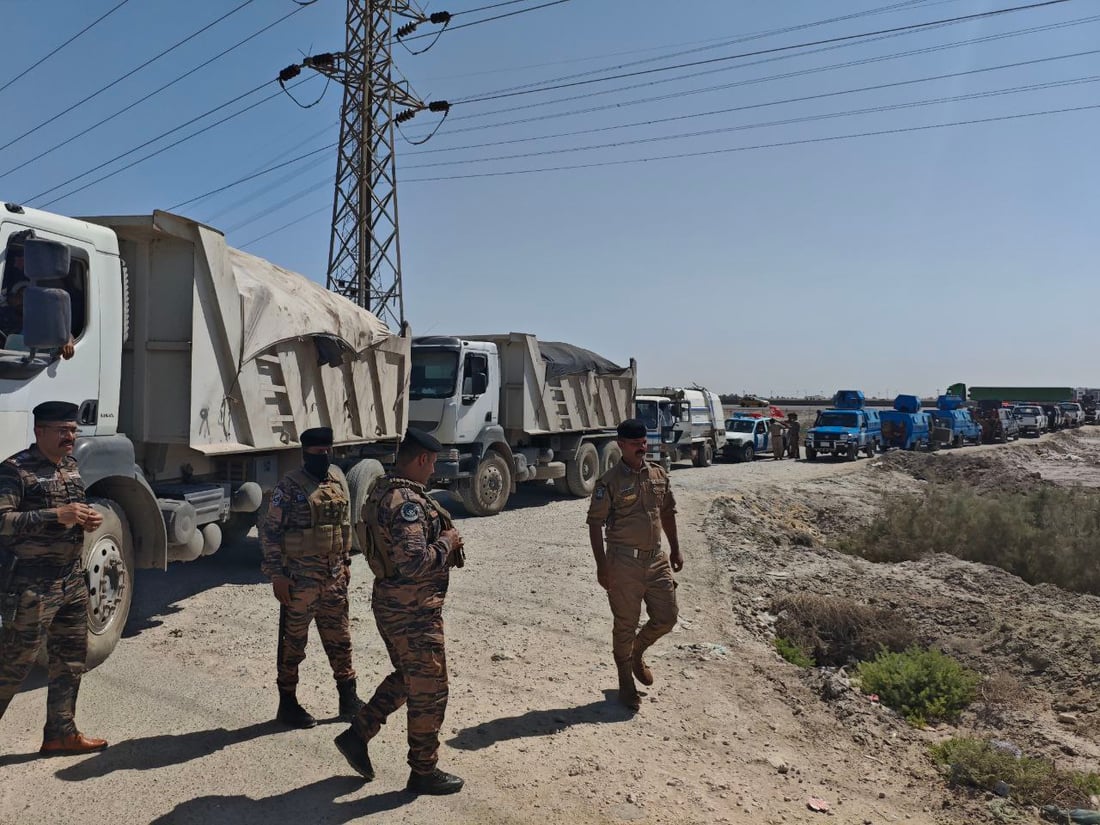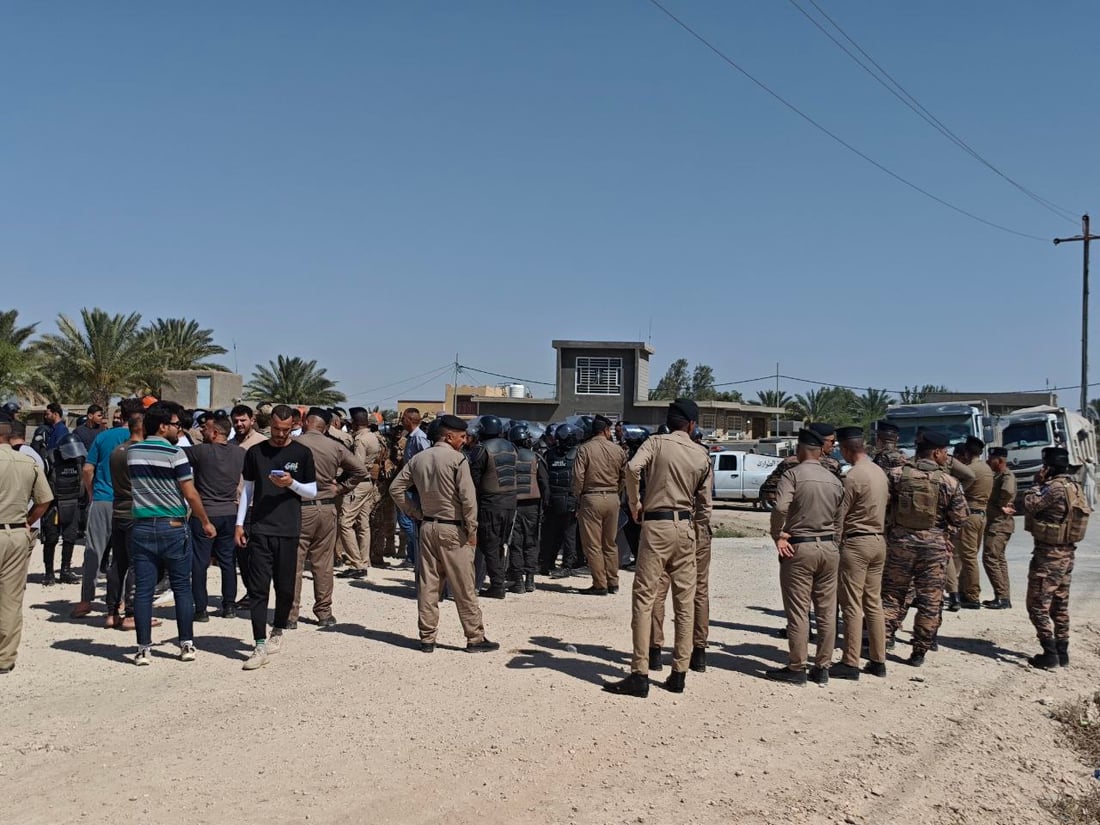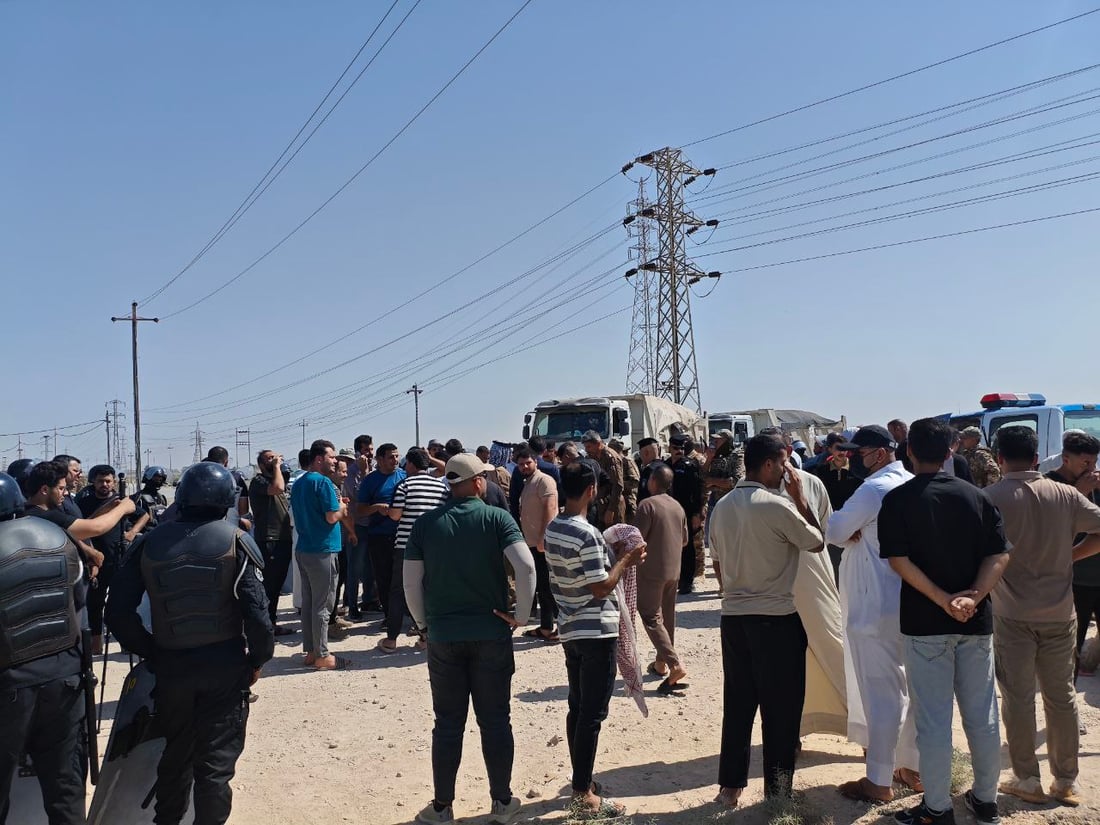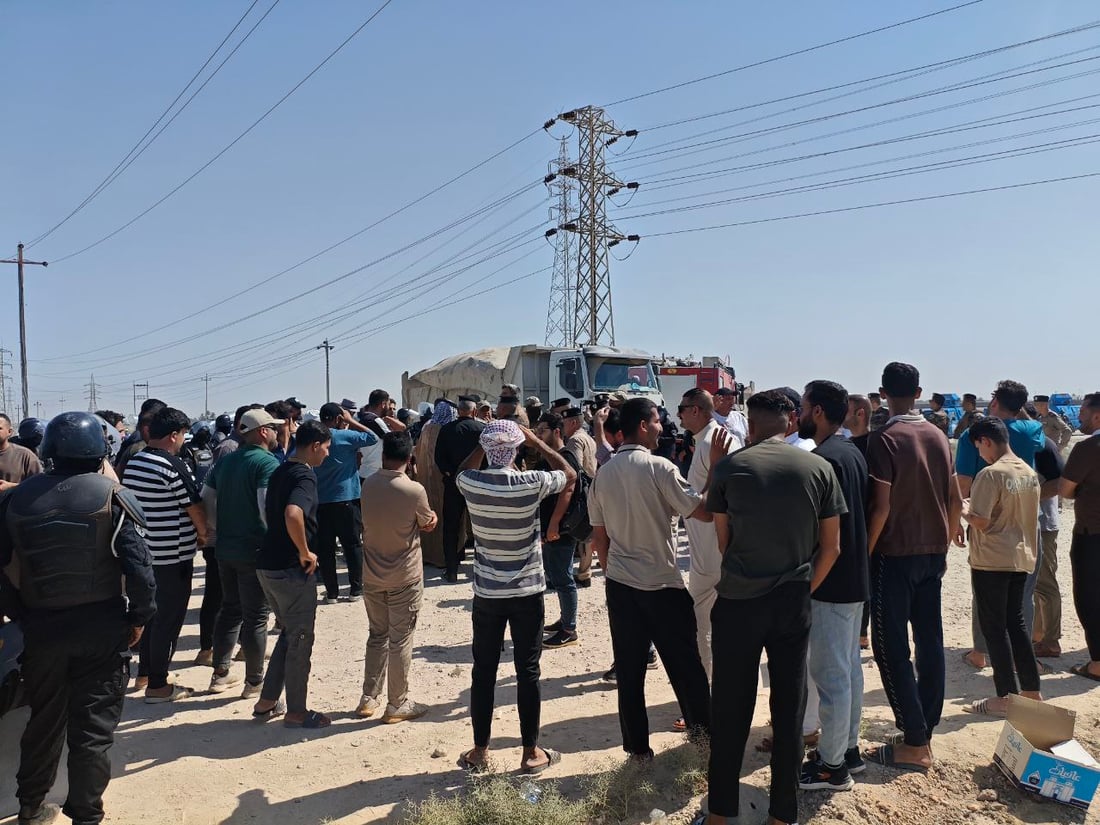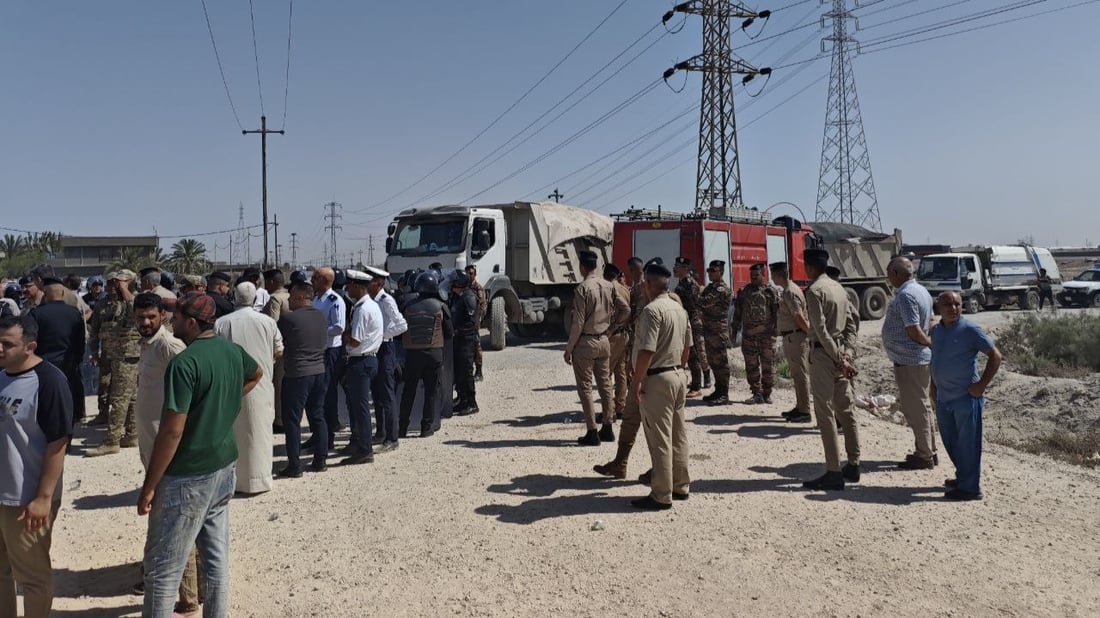
Residents and security forces gather at a blocked road near the Siyahiya landfill in Nahiyat al-Neel, Babil, after locals shut down access to protest health hazards linked to the site. Garbage trucks were unable to enter, causing a traffic buildup. Photo by 964media
'Paying the price'
Locals block access to Babil landfill over health concerns, fires
BABIL — Dozens of residents in Nahiyat al-Neel, a northern town in Babil governorate, blocked access to the Siyahiya landfill on Saturday, preventing municipal garbage trucks from entering the site and causing significant traffic congestion.
Protesters say the landfill has created long-standing environmental and health hazards, particularly due to repeated fires they say are set by scavengers searching for scrap metals. They accuse local authorities of failing to adequately respond to the risks.
“For over 15 years, the people of Neel have suffered environmental damage from the Siyahiya landfill and the fires started by scavengers under the pretext of finding metals,” protest representative Ahmed al-Kanani told 964media. “The landfill spans seven dunams but cannot accommodate the volume of waste—750 tons are dumped there daily, and residents are paying the price with their health.”
He added that thick smoke from the fires often makes it impossible to use air coolers at night in many surrounding villages. “Dozens, especially the elderly, have developed respiratory illnesses and some forms of cancer,” he said.
In most Iraqi cities, waste is collected by municipal trucks and transported to remote landfills where it is dumped and covered with soil. Recycling infrastructure remains limited, and few cities have operational facilities for processing or repurposing waste, increasing pressure on existing landfills and raising environmental concerns.
In response to the protests, Hilla municipality director Ahmed Muntathir acknowledged the landfill’s problems but said efforts are underway to address them. “Yes, we have issues with the landfills, especially because the waste volumes are extremely high. As for the fires, the municipality is not responsible,” he said.
Muntathir added that the local government has completed plans for a new waste recycling plant and will soon offer it as an investment opportunity. “The second step involves directing all administrative units to allocate land outside municipal boundaries for temporary use as landfills until the recycling plant is completed,” he said.