
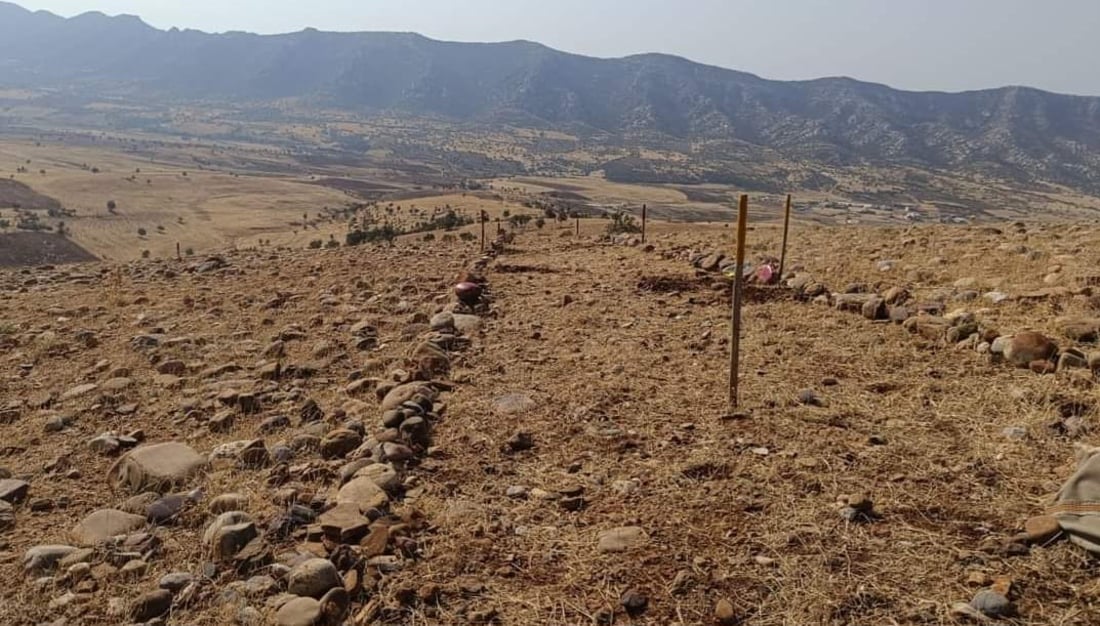
A view of the mined area designated for clearance in the Mangesh subdistrict of Duhok province, photo: KRG's Mine Action Agency
Duhok's Mangesh subdistrict
Kurdistan Region begins clearance of over 29,000 square meters of mined land
DUHOK – The Kurdistan Regional Government’s Mine Action Agency announced Monday that it has begun clearing 29,379 square meters of land contaminated with mines and unexploded ordnance in Duhok’s Mangesh subdistrict. This effort focuses on an area that was mined in 1981 by Iraq’s former regime during its conflict-ridden period.
The Kurdistan Region, scarred by decades of conflict, including the Iran-Iraq War and clashes with the former Baathist regime, remains one of the most heavily mine-contaminated regions in the world. These mines continue to pose a significant threat to the population.
Jabbar Mustafa, Director of the Mine Action Agency, told 964media that of the original 776 square kilometers of mined land in the Kurdistan Region, 576 square kilometers have been cleared, leaving 200 square kilometers still contaminated. Mustafa also revealed that 13,580 individuals have been affected by mines—either killed or injured—with an estimated 5,000 deaths attributed to landmines.
In 2023, the agency recorded 23 landmine incidents, resulting in 10 deaths and 13 injuries. Since the Kurdistan Regional Government (KRG) was established in 1991, a total of 13,500 people have been killed or injured by landmines in the region.
Ongoing awareness campaigns are in place to educate the public about the dangers of landmines and unexploded ordnance. In July 2024, two teams from the Directorate of Mine Affairs in Erbil conducted programs for families in Soran’s border areas, aiming to reduce the risk of further incidents.
Nationally, nearly 35,000 people in Iraq have been impacted by landmines, unexploded ordnance, and improvised explosive devices as of the end of 2022, according to the Landmine and Cluster Munition Monitor. The southern governorates, areas near the Iranian border, and the Kurdistan Region remain the most severely affected regions.