
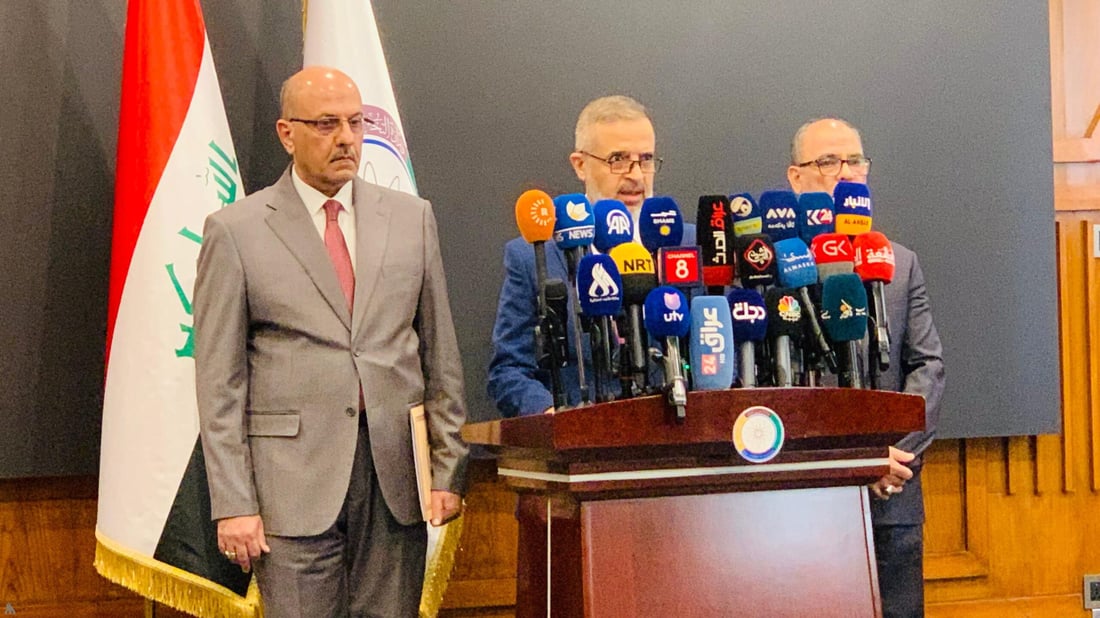
Planning Minister Mohammed Tamim presents the final 2025 census results during a press conference in Baghdad.
Iraq announces final 2025 census results, recording population of 46.1 million
BAGHDAD — Planning Minister Mohammed Tamim on Wednesday announced the final results of Iraq’s 2025 general census, reporting a total population of 46,118,793 residents, including Iraqis and non-Iraqis. He said the number of Iraqi citizens at the time of enumeration reached 45,787,000, while foreign residents totaled 340,131 people. Iraq has 8,054,385 households nationwide.
Iraq conducted its first nationwide census in nearly four decades from Nov. 20–22, 2024, with support from the United Nations Population Fund and 120,000 researchers deployed across all 18 governorates. Prime Minister Mohammed Shia al-Sudani announced initial results showing a population of 45,407,895, with 70.3% living in urban areas and 29.7% in rural areas, and 7,898,588 households with an average size of 5.3 members.
Tamim said this census may be the last carried out through traditional field enumeration, noting that future counts will shift to registry-based systems. He said the 2025 census used updated digital tools, covered all residents inside Iraq, and will be followed by a plan to enumerate Iraqis living abroad.
He described the census as producing a “compass” of demographic and spatial data to guide development strategies, allowing the government to target projects according to population needs and giving researchers detailed information on population distribution and urban growth.
According to the ministry, Iraq’s population includes 23,161,000 males (50.2%) and 22,957,000 females (49.8%). More than 7 million households are headed by men and more than 910,000 by women. The national average household size is 5.7 people, with southern governorates recording larger households than those in the north and west. Population growth reached 2.5%.
A total of 16,555,000 residents are between 0 and 14 years old, representing 35.9% of the population and underscoring Iraq’s youthful demographic profile. Another 27,875,000 fall in the working-age group of 15–64 — 60.4% of the population — a level Tamim said places Iraq in the “demographic dividend” stage, with a peak share of working-age residents compared with dependents. People aged 65 and above number 1,688,000, or 3.6%.
The dependency ratio stands at 65, with a child dependency rate of 59 and elderly dependency rate of 6. Housing data shows that 72% of residents live in owned or family homes, while 19% rent privately. Iraq has 8,034,000 housing units, excluding government, military and security-ministry properties.
Tamim said all governorate-level results have been finalized and will be delivered to local administrations, including detailed breakdowns for districts, subdistricts, villages and neighborhoods. The next phase will provide analysis of service needs to support local development plans. He added that the Statistics and GIS Authority will begin distributing census datasets next week to ministries, governorates and the three presidencies.