
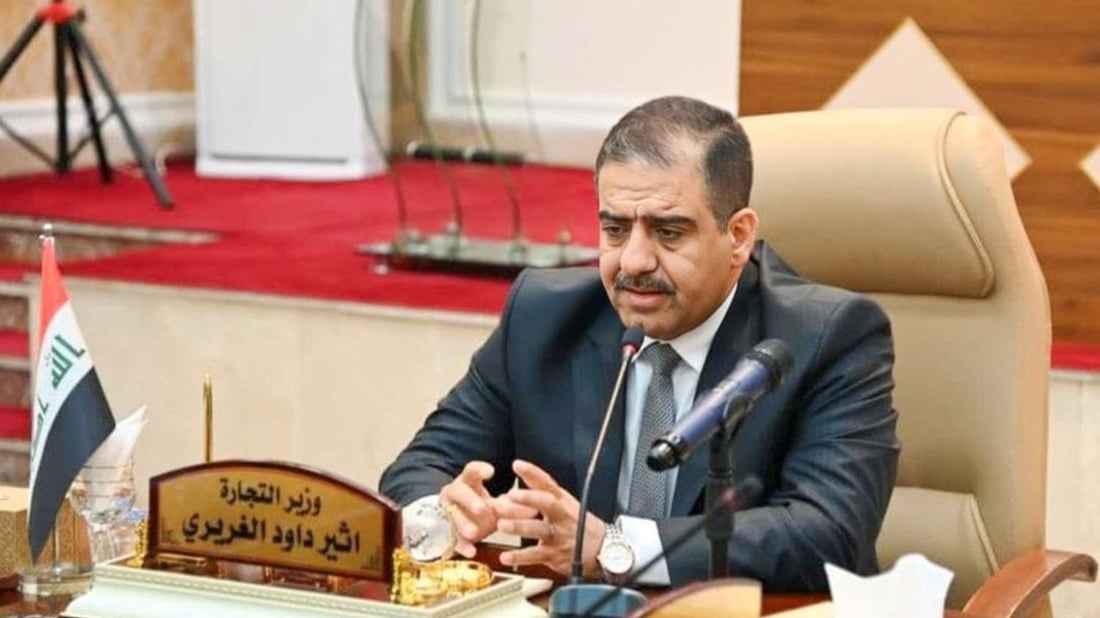
Iraq’s Minister of Trade Atheer Al-Ghurairi speaks during a meeting in Baghdad.
Means testing
Iraq to cut food rations for citizens earning over 1.5 million dinars, trade minister says
BAGHDAD — Iraq’s Minister of Trade Atheer Al-Ghurairi on Thursday announced that the public food ration card program will be restricted to lower-income citizens, with those earning more than 1.5 million dinars (approximately $1,065) per month to be excluded under a reinstated income cap.
“The food ration deduction applies to those whose salaries exceed 1.5 million dinars,” Al-Ghurairi told the state-run news agency. “There must be a change in the culture of subsidies. A government employee with a salary of 1.5 million dinars cannot receive the same support as someone without income or earning less than 500,000 dinars.”
He said the subsidy system, introduced in the 1990s, no longer reflects Iraq’s current income landscape. Although the income ceiling had been temporarily raised to two million dinars following exchange rate changes, the ministry is now returning to the previous threshold.
Al-Ghurairi emphasized that the move aims to make the system fairer by directing food assistance to those most in need. “Today, some employees earn between 1.5 million and 2 million dinars, or even more. Those with such incomes should not receive the same support as social welfare beneficiaries,” he said.
The ministry continues to review and update beneficiary lists, he said, noting that hundreds of thousands of new employees had recently been added to the system. He urged those no longer eligible — including business owners, investors, and high-ranking officials — to voluntarily withdraw from the program.
According to the minister, removing ineligible individuals will improve both the quality and quantity of rations distributed. The program currently provides monthly baskets of basic food items such as rice, flour, sugar, and oil to millions of Iraqis.
In October 2025, the Ministry of Trade said three to five trillion dinars (roughly $2.13–$3.55 billion) had been allocated to the ration program over a three-year period. At the time, ministry spokesperson Mohammed Hanoun said the goal was to modernize the system into “an integrated economic project that contributes to achieving national food security.”