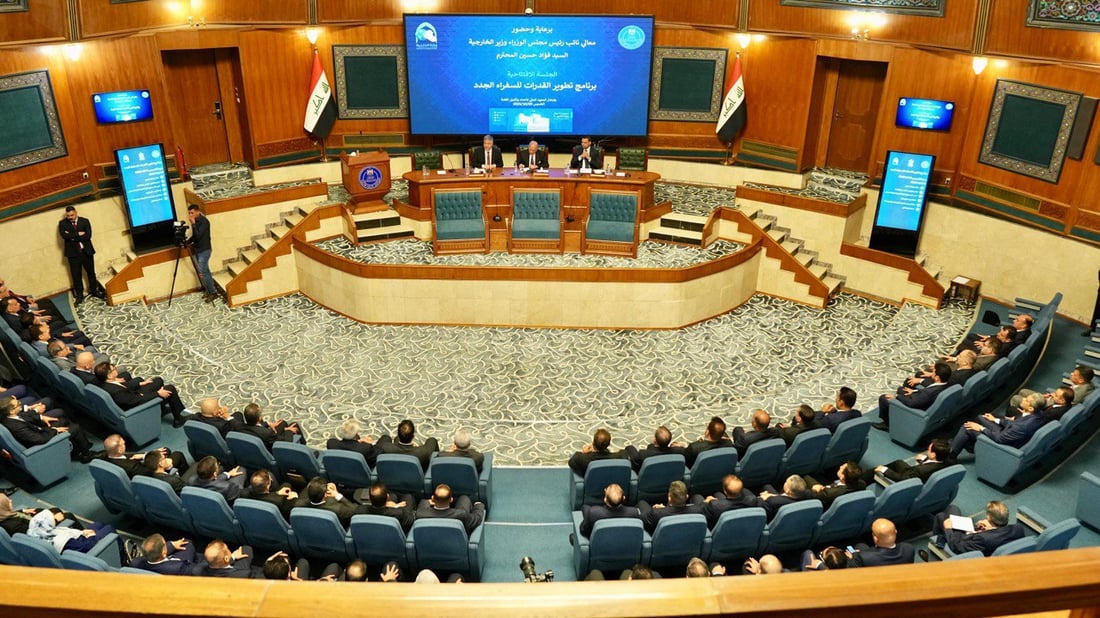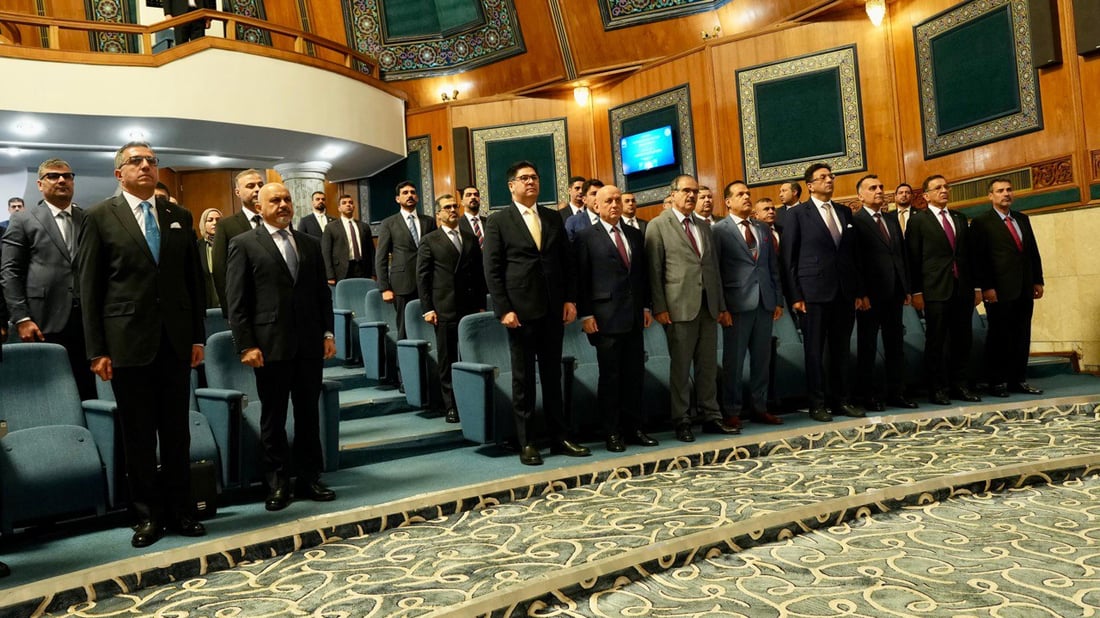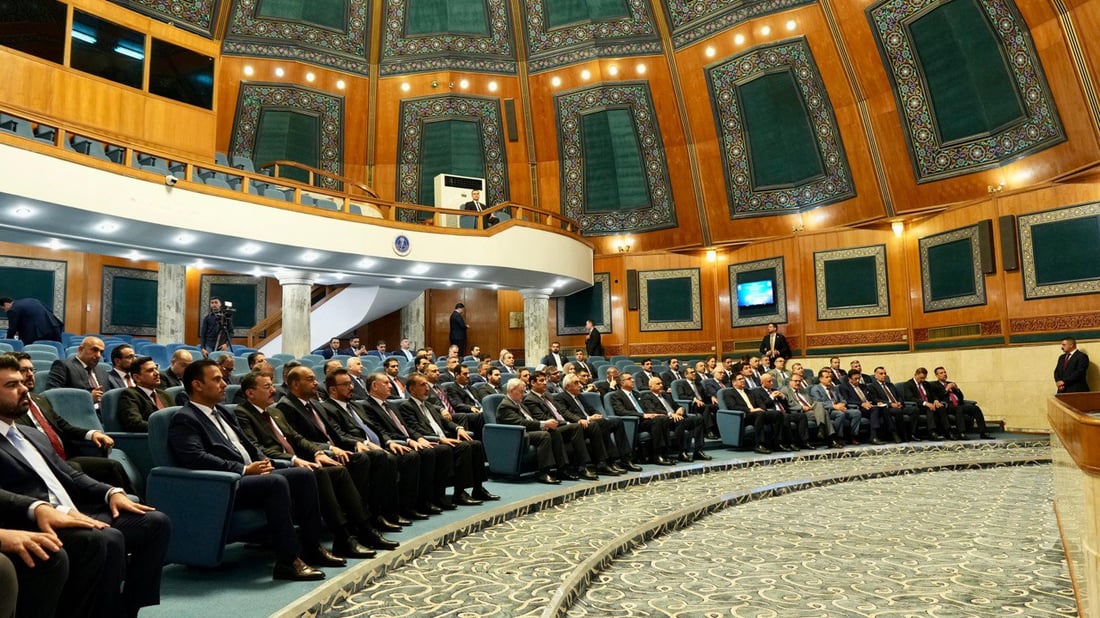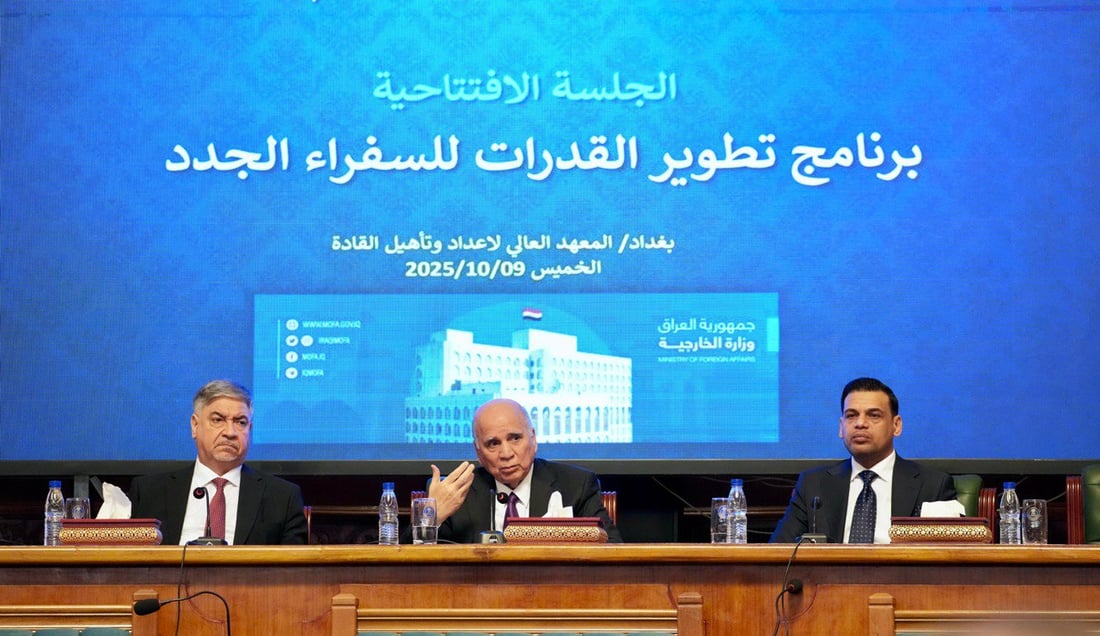
Iraqi Foreign Minister Fuad Hussein speaks during the opening session of the capacity development program for new ambassadors at the Higher Institute for Leadership Development in Baghdad on Thursday. (Photo: Ministry of Foreign Affairs)
93 recent appointees
Foreign minister launches training program for Iraq’s new ambassadors
BAGHDAD — Iraqi Foreign Minister Fuad Hussein on Thursday launched a capacity development program for newly appointed ambassadors at the Higher Institute for Leadership Development in Baghdad, emphasizing the need for constant renewal in Iraq’s diplomatic work.
“Iraqi diplomacy requires continuous modernization in light of the world’s rapid changes,” Hussein said, urging ambassadors to represent Iraq “with distinction in international forums,” to embrace cultural openness, and to “work as one team.” He stressed that “Iraq’s national interests and identity must remain at the forefront of diplomatic priorities.”
In August, Iraq’s parliament approved 93 new ambassadors, the first such appointments since 2009. Prime Minister Mohammed Shia al-Sudani welcomed the move, saying it would “strengthen Iraq’s diplomatic corps” and fill long-standing vacancies. The Foreign Ministry said the decision would enhance Iraq’s international presence and support Iraqis abroad.
According to a statement from the Ministry of Foreign Affairs, the session was chaired by Deputy Minister for Political Planning Affairs, Ambassador Hisham Al-Alawi, who congratulated the ambassadors on their new posts and highlighted the importance of representing Iraq’s long-standing diplomatic institution internationally.
Hussein congratulated the ambassadors on their appointments and thanked the institute’s leadership for hosting the program. He noted the importance of education and training in building diplomatic capacity, saying “the diplomatic world is in constant change, which requires continuous learning and updating of knowledge and skills.”
He called on diplomats to understand diverse political systems and cultures, adding that a diplomat “represents the state and political system with balance and responsibility.” Hussein also recalled the challenges Iraq faced under the former regime, including wars and isolation, and said that “despite regional conflicts, Iraqi diplomacy has succeeded in protecting the country and preventing aggression.”
The minister described Iraq’s geographic position as requiring “an active diplomacy” and said that the country’s pluralistic society is “a source of strength and richness in building foreign relations.”
He also highlighted the importance of serving Iraqi communities abroad, calling them “a national asset and an intellectual resource that strengthens Iraq’s connection with other peoples and societies.”