
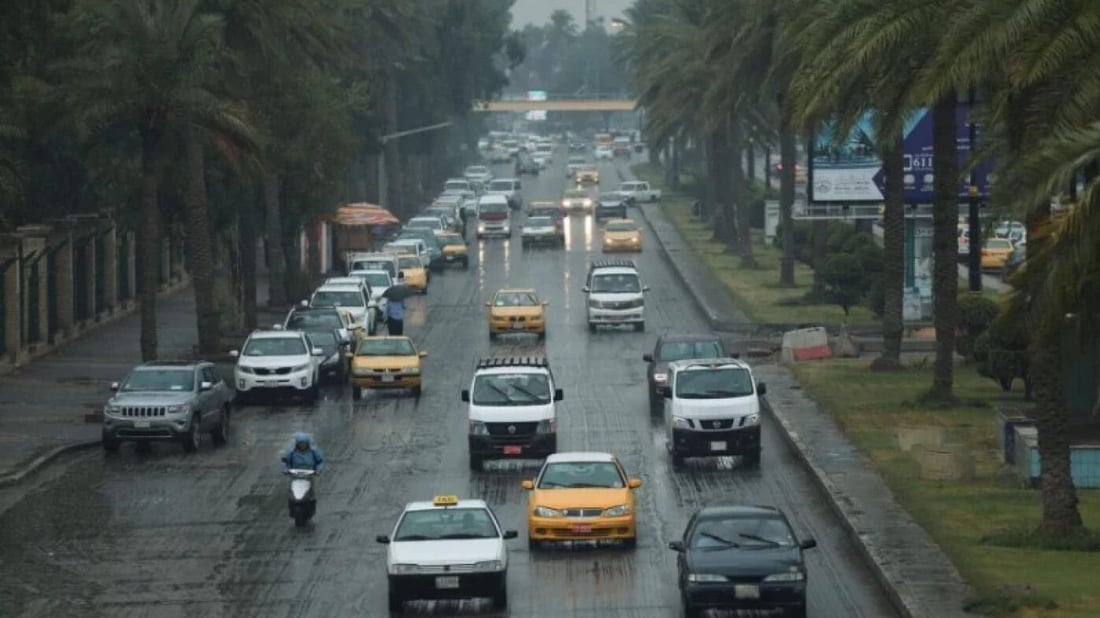
Vehicles move along a rain-soaked street in Baghdad
Group says polluted rain in Baghdad and Basra poses acid-like risks
BAGHDAD — Iraq Green Observatory, an environmental monitoring group, warned Saturday that recent rainfall across much of the country, particularly in heavily polluted cities such as Baghdad and Basra, poses environmental and health risks comparable to acid rain because of high levels of air pollution.
In a statement dated Jan. 10, the observatory said “the rain falling on areas of Iraq, especially polluted ones, specifically Baghdad and Basra, is extremely dangerous and comparable to acid rain that can affect soil, buildings and the lives of citizens.” It said air quality in the capital during Friday’s rainfall was “very poor,” with high concentrations of pollutants.
The group warned that contaminants suspended in the air can be washed down by rain, settle in the soil and move into agricultural produce sold in local markets, before ultimately being consumed by residents.
The observatory explained that acid rain is a serious environmental problem when rainfall has a pH level below 5.6 and forms when gases such as sulfur dioxide and nitrogen oxides react in the atmosphere to produce strong acids like sulfuric and nitric acid, which then fall with precipitation. It said these substances can damage soil structure, harm crops and erode buildings.
The group called on relevant authorities “to address the ongoing air pollution, which has no solution so far, despite those authorities confirming that they closed factories and facilities and addressed waste fires that cause this pollution.”
Recent rainfall has slightly improved Iraq’s strained water reserves, raising storage levels by up to 1 billion cubic meters at several major dams. However, the Ministry of Water Resources says overall storage in reservoirs and lakes remains up to 80 percent below capacity, far short of the country’s operational storage of about 80 billion cubic meters.
Officials estimate Iraq needs at least 18 billion cubic meters of stored water to safely pass the coming summer. Reserves fell to about 3 billion cubic meters at the end of last summer, the lowest level in 70 years, prompting warnings that careful management and close monitoring of inflows from neighboring countries will remain essential despite the recent rains.