
Iraqi judiciary warns against fighting in foreign wars as courts target Russian recruitment
BAGHDAD — Iraq’s Supreme Judicial Council said Wednesday that joining the armed forces of another country without government approval is punishable by imprisonment, as authorities intensify efforts to curb the recruitment of Iraqis to fight abroad, including in the war in Ukraine.
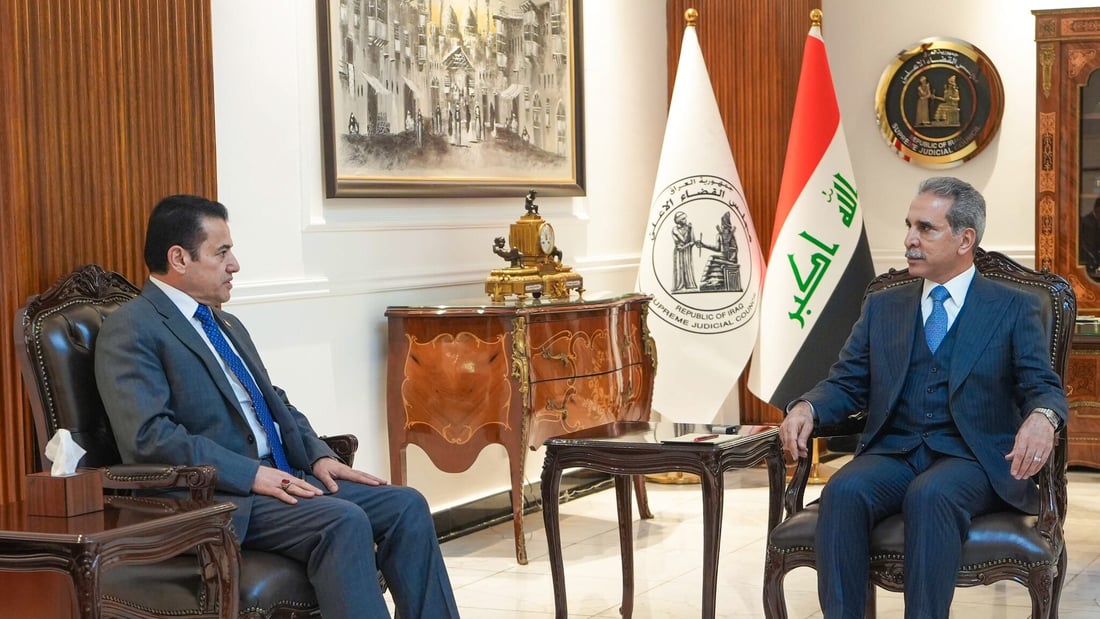
The council’s head, Faiq Zidan, received National Security Adviser Qasim al-Araji in Baghdad, along with a committee formed under a cabinet order to combat the recruitment of Iraqis to fight in Russia, according to a statement from the council’s media office.
Discussions focused on how to handle cases involving Iraqis engaged in combat in Ukraine. Zidan said “the Iraqi Penal Code punishes with imprisonment anyone who joins, in any form, the armed forces of another state without the approval of the Iraqi government.”
The statement did not give a figure for the number of Iraqis involved in foreign fighting, but it comes as courts step up action against recruitment networks.
Earlier this month, a criminal court in Najaf sentenced a man to life in prison and fined him 15 million Iraqi dinars, about $10,560, after convicting him of recruiting Iraqis to fight in Russia. A judicial source told 964media the defendant was part of an “international criminal gang” that lured recruits with money and promises including free housing and the possibility of marriage to Russian women.
Public attention to the issue increased in November after Iraqi artist Hussein al-Turki appeared on social media wearing a Russian military uniform and described what he said was a deceptive recruitment process. He said he was promised work as a performer in Moscow but later found himself “on the front lines in Ukraine,” urging authorities to intervene urgently to rescue Iraqi youths who had been drawn in.
Ukraine’s ambassador to Iraq, Ivan Dovhanych, has also said Iraqi citizens have been killed while fighting alongside Russian forces. He wrote that Russia was seeking to recruit fighters from abroad, particularly from poorer countries, adding that Iraq was among those affected. He praised Iraqi courts for issuing life sentences against recruiters, calling the rulings evidence of Iraq’s determination to protect its citizens from “death in a war that does not concern them.”
In September, another Iraqi court issued a life sentence under the anti-human trafficking law against a man convicted of organizing groups and sending Iraqis to fight abroad in exchange for financial compensation.