
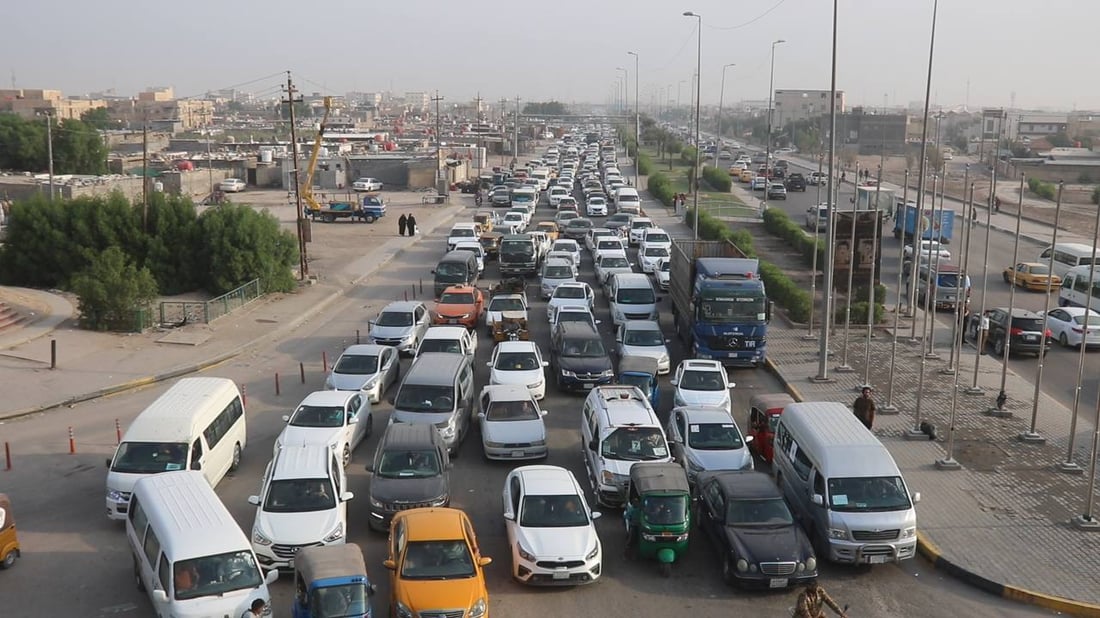
Traffic pressure mounts
Iraq announces plan to regulate car imports as vehicle numbers outpace road capacity
BAGHDAD — Iraq’s Ministry of Trade on Tuesday announced a five-point plan to regulate imported vehicles, as the country’s growing car fleet continues to exceed the capacity of existing road infrastructure.
Ministry spokesman Mohammed Hanoun said the measures are not intended as “a total ban or random reduction of car imports,” but aim instead “to regulate the market in a way that balances meeting citizens’ needs with preserving the public interest,” particularly in relation to traffic congestion, air pollution and energy efficiency.
Hanoun said the plan introduces new technical and administrative standards, including requirements related to fuel efficiency and emissions. It may also impose age limits on imported vehicles or restrict certain categories to hybrid or electric cars. He said customs duties and taxes could be adjusted to discourage the import of vehicles with large engines or high fuel consumption, noting that the Kurdistan Region already enforces age limits on imported cars.
He said the ministry is coordinating with the Ministries of Transport, Environment and Interior to ensure “policy integration and shared goals,” adding that the plan also supports greater investment in public transportation to reduce reliance on private vehicles.
The announcement follows figures from the Ministry of Planning showing that the number of registered vehicles in Iraq reached 8,287,604 by the end of 2024, a 2.4% increase from 2023. According to the data, vehicle ownership now averages 187 cars per 1,000 residents nationwide, up from just over 7 million total vehicles in 2020.
Trade officials have previously warned that Iraq’s road network was designed to handle roughly 5 million vehicles, leaving millions of cars beyond planned capacity. The State Company for Automotive Trading said earlier this year that Iraq has imported and registered about 200,000 vehicles annually over the past four years, following the easing of import licensing requirements.
Vehicle imports have been particularly high in the Kurdistan Region. Regional trade officials said more than 114,000 cars entered the region in the first eight months of this year, putting 2025 on track to exceed the 122,000 vehicles imported in 2023 and the 172,000 recorded in 2024. Imports enter through the Parwezkhan, Bashmakh, Haji Omaran and Ibrahim Khalil border crossings, under rules limiting imports to vehicles from the most recent three model years.