
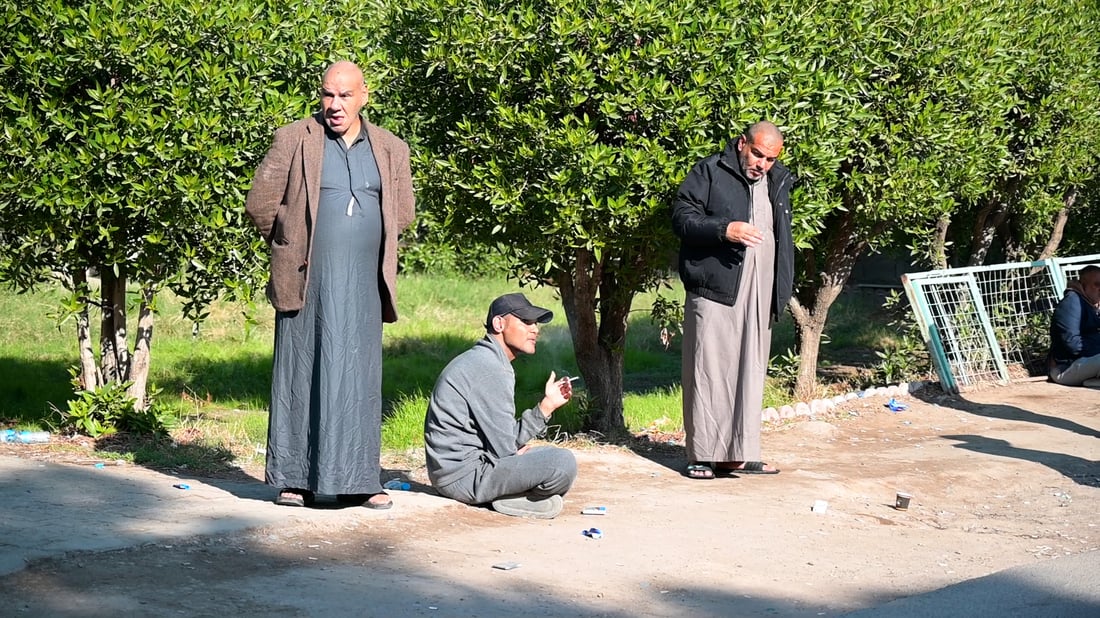
Patients gather outdoors inside the grounds of al-Rashad Psychiatric Hospital in Baghdad, where authorities say hundreds of recovered individuals remain due to lack of identification or family support.
Iraq orders review of al-Rashad psychiatric cases, plans new mental health hospitals
BAGHDAD — Prime Minister Mohammed Shia al-Sudani has ordered a review of hundreds of cases at al-Rashad Psychiatric Hospital in Baghdad after months of public debate over claims that mentally sound people remain confined there despite no longer needing in-patient care.
The decision follows renewed attention to reports that “600 people who are sound of mind” are still living at the facility. In a Dec. 3 interview, al-Rashad director Firas al-Kadhimi told 964media that the figure referred instead to patients whose health has improved but who cannot be discharged because they lack identification documents or family support.
“There are not 600 sane individuals as stated by the head of the parliamentary health committee,” al-Kadhimi said. “There are 600 patients whose health has improved and who can leave to resume their lives with continued treatment, but most of them are unidentified or their families do not ask about them.”
Al-Kadhimi said al-Rashad “is an old hospital dating back to the 1940s. It opened in 1950, and the suffering has continued since then due to the annual increase in patient numbers with limited services, as their number exceeds 1,500.” He said the hospital receives “40 to 50 patients” more each year and relies on both medication and rehabilitation, including “physical activity, sports, painting, theater and handicrafts.”
He added that staffing levels remain low and that many health workers avoid working at the facility because “there are no financial allowances that match the nature of the work here.” He noted that the site “was a British military camp and was handed over to the Iraqi government in 1950 as a psychiatric hospital, so it remained in its old design and contains detention rooms.”
The Iraqi News Agency reported that al-Sudani ordered a committee to examine the cases of patients who have recovered but remain at al-Rashad. The review will focus on people who no longer require hospitalization yet remain institutionalized for administrative or social reasons.
As part of a broader overhaul, al-Sudani directed that recovered patients from the south and Middle Euphrates be transferred to the psychiatric hospital in Diwaniya and that those from the Kurdistan Region be moved to psychiatric facilities in Sulaymaniyah. He also recommended establishing three new psychiatric hospitals: one in Salah al-Din serving Salah al-Din, Anbar, Kirkuk and Nineveh; one in Karbala serving Najaf, Karbala, Babil and Wasit; and one in Baghdad.
His media office said the steps reflect the government’s “priority of the health sector in the service work adopted by the government” and its plan to expand bed capacity “whether through building new hospitals or expanding existing ones.”
The prime minister approved financial incentives for nurses, doctors and other staff at al-Rashad, converting existing workers to contract status, hiring additional service workers and granting allowances to medical staff in the forensic psychiatry department. The hospital will also receive 200 new beds.
Al-Sudani further instructed the Interior Ministry to take custody of detainees held at al-Rashad “within a short period” once a medical committee confirms their treatment is complete. A joint committee between the Labor Ministry and the hospital will move recovered patients who require monthly treatment and lack family support to residential care homes run by the Labor Ministry.
Under the changes, al-Rashad will be separated from the Baghdad Health Directorate and reclassified as an independent directorate.