
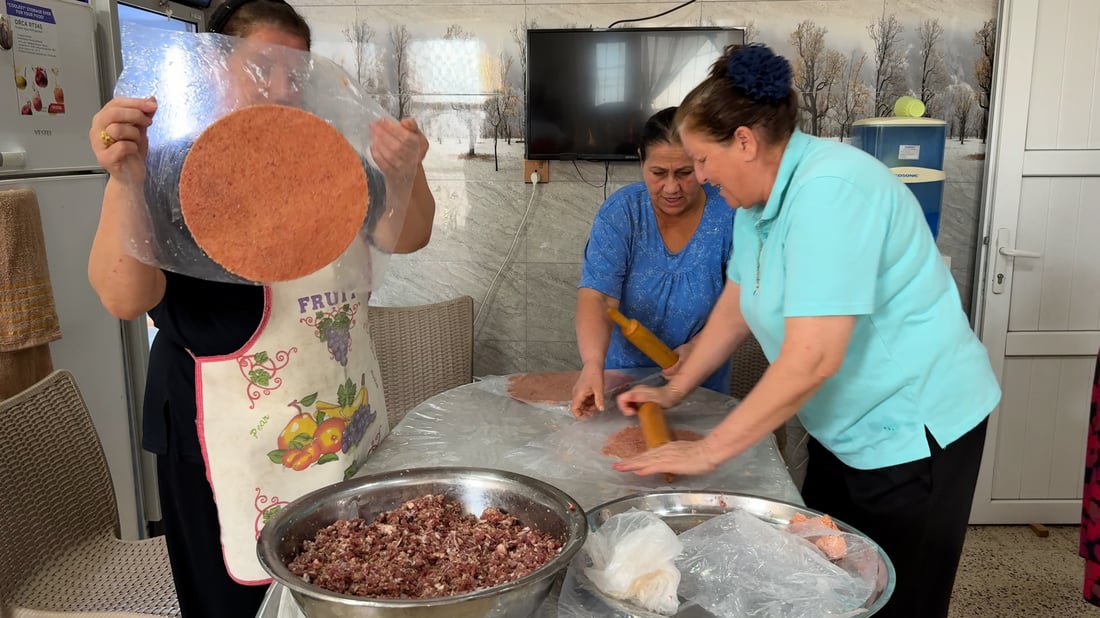
The Kakona sisters prepare traditional kubbah in their Hay Al-Muallimeen kitchen in Bartella, keeping the town’s flavors alive. Photo by 964media
Nineveh
Bartella sisters keep kubbah tradition alive through family cooking
NINEVEH — In Hay Al-Muallimeen of Bartella, three sisters — Salama, Thaera, and Intisar Kakona — have turned cooking into a family ritual, preserving their town’s kubbah traditions and passing them down through shared practice.
Inside their warm kitchen, the sisters prepared kubbah the Bartella way — known for its simple blend of wheat groats and meat without added ingredients. “The most annoying thing for women is when the kubbah falls apart,” said Salama Kakona. “But there’s a secret to keeping it together. First, make sure you don’t forget the salt. Second, keep the fire strong, not low. Third, use good-quality groats. Then the kubbah will stay firm and won’t fall apart.”
The women also make sour kubbah, large kubbah, kleicha, and arooq baked in a tandoor — all beloved dishes in Bartella.
“We start making the large kubbah, which we call Kbibbi Rabi, by preparing two kinds of meat,” Salama told 964media. “We use completely lean meat for the dough and another type with a little fat for the filling. We mix groats and bulgur in equal amounts, adding only salt. The filling is made of meat, onions, regular spices, a kind of black spice we always use, and salt.”
She said Bartella kubbah differs from Mosul’s version. “They add raisins and almonds, but we don’t,” she said. “It’s about taste and tradition. We usually make kubbah for happy occasions and holidays. Even if one of us can make it alone, we’re used to the gathering. We share love, and we’re close sisters who take pride in this dish.”
Salama added that kubbah often cracks if salt is forgotten or the fire is too weak. “The kind of groats matters too,” she said. “It must be from a good source, not low-quality.”
Thaera Kakona said cooking together brings the sisters closer. “In our gatherings, we prepare special dishes for the house, usually during holidays and invitations,” she said. “We always come together to make dishes like sour kubbah, large kubbah, kleicha, and arooq in the tandoor. We’re known in Bartella for making arooq this way — it takes teamwork. One handles the baking, another the preparation, another the meat. We work in harmony. This dish today was made in my sister’s house, but it’s for everyone.”
Intisar Kakona said kubbah should never be stored for long periods. “We prepare it five days or a week before an event and freeze it,” she said. “On the day, we take it out and boil it directly. If it stays in the freezer too long, it absorbs other food flavors and loses its original taste.”
She added, “On normal days, we make just enough for the people present and cook it fresh for lunch or dinner. If we must freeze it, we make sure it’s at the right temperature so ice doesn’t build up. Improper freezing changes the taste and texture. Then it’s no longer the kubbah we know.”