
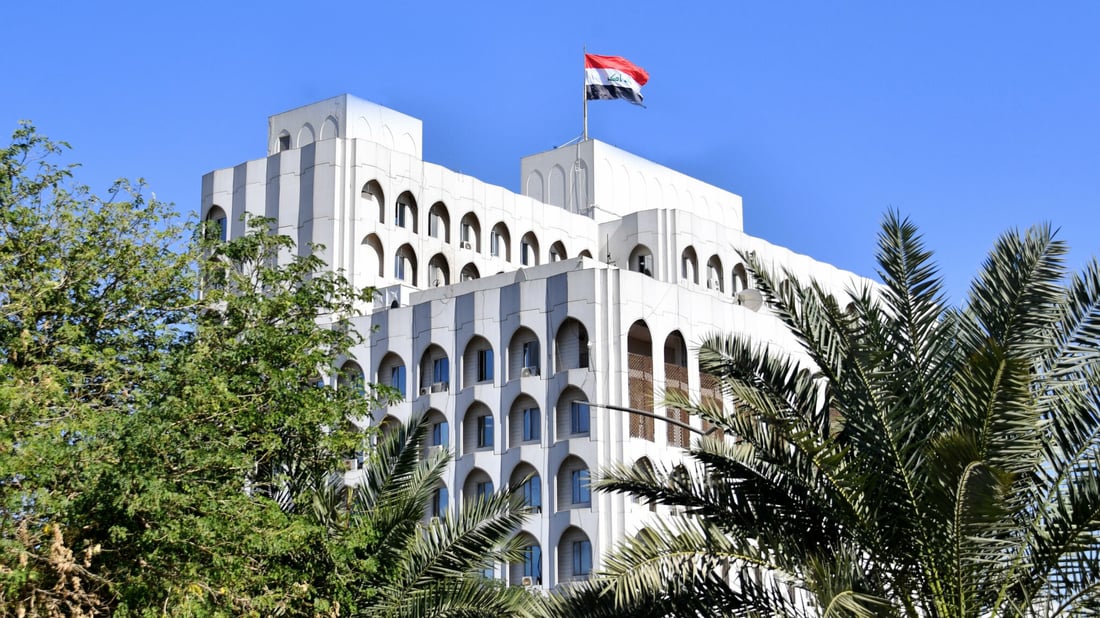
The Iraqi Foreign Ministry building in Baghdad
'Inaccurate'
Foreign Ministry rejects leaked ambassadorial nominee lists, cites political agendas and misrepresentation
BAGHDAD — Iraq’s Ministry of Foreign Affairs on Monday dismissed recently leaked lists of alleged ambassadorial nominees as inaccurate, saying they do not reflect the identities or qualifications of the actual candidates under consideration and were likely circulated to serve political agendas.
In a statement, the ministry said, “The circulated lists are inaccurate and do not represent the true names, national, professional, or academic backgrounds of the individuals mentioned.” It added that the leaks and related commentary appeared to be driven by personal rivalries, political competition, and objections from individuals who failed to meet the ministry’s formal selection standards.
The ministry said the current ambassadorial selection process was developed over more than two years by a high-level committee. About half of the nominees are career diplomats holding senior ranks such as minister plenipotentiary or counselor, while the rest were selected from academia, civil society, and other professional sectors. The ministry contrasted this with a 2009 ambassadorial list, which it said included more than 90% of appointments from outside the ministry.
The statement followed the circulation of a list reportedly containing more than 100 names said to have been approved by the Council of Ministers but not officially released. The list drew criticism for allegedly including relatives of senior government and political figures and reignited debate in parliament over the transparency of the selection process.
According to the ministry, Iraq currently has more than 90 vacant ambassadorial posts across its foreign missions and within the central administration. Only 27 ambassadors are presently in service, the ministry said, 11 of whom have reached mandatory retirement age, with another five expected to retire by 2026. The shortage has placed strain on diplomatic operations and left several senior-level roles unfilled.
The ministry said the nomination process adheres to constitutional, legal, and administrative guidelines, and seeks to reflect Iraq’s social and political diversity. It also provided a breakdown of the candidates’ backgrounds: 64% are civil servants, 23% come from families of political prisoners, martyrs, or individuals dismissed for political reasons, 19% are affiliated with political parties, civil society groups, or research institutions, and 17% are university faculty. In terms of education, 62% hold postgraduate degrees and 38% have bachelor’s degrees.